

Hey there! As a supplier of Titanium Processed Products, I often get asked about the electrical conductivity properties of our products. Well, let's dive right into it.
Understanding Titanium's Basics
First off, titanium is a pretty unique metal. It's known for its high strength - to - weight ratio, corrosion resistance, and biocompatibility. These properties make it super popular in various industries, from aerospace to medical. But when it comes to electrical conductivity, it's a bit different from some other metals we're more familiar with.
Titanium is a transition metal, and its electrical conductivity is relatively low compared to metals like copper and aluminum. You see, electrical conductivity depends on the ability of electrons to move freely within a material. In metals like copper, there are a lot of free electrons that can easily conduct electricity. In titanium, the electron movement is more restricted.
The electrical conductivity of a material is usually measured in Siemens per meter (S/m). At room temperature, copper has an electrical conductivity of around (5.96×10^{7}\text{ S/m}), while titanium has a conductivity in the range of (2.38×10^{6}\text{ S/m}). That means copper can conduct electricity about 25 times better than titanium.
Factors Affecting Titanium's Electrical Conductivity
There are several factors that can influence the electrical conductivity of titanium processed products.
Purity
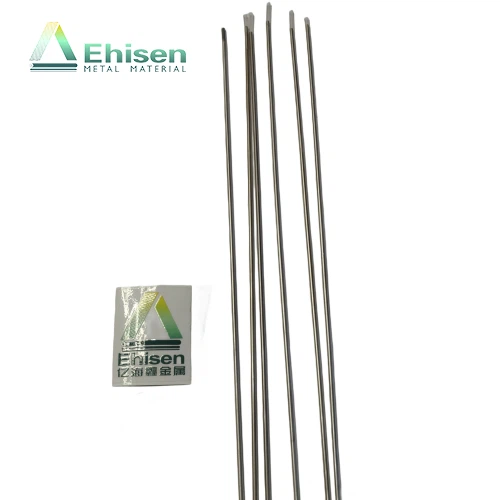
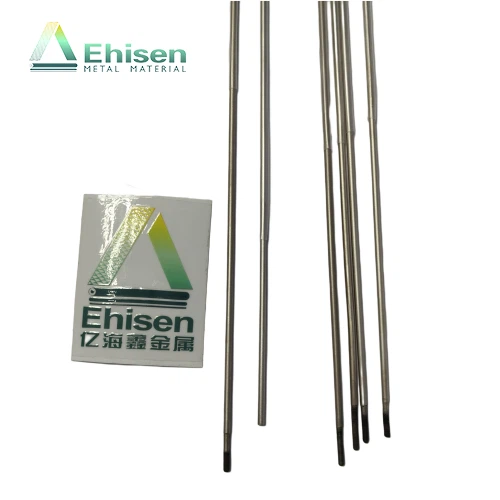
The purity of titanium plays a huge role. Higher - purity titanium generally has better electrical conductivity. Impurities in titanium can act as obstacles to electron flow. When there are fewer impurities, electrons can move more freely, increasing the conductivity. For example, our Gr1 High Purity Titanium Wire is made with high - grade titanium. The high purity ensures that it has relatively better electrical conductivity compared to lower - grade titanium wires.
Temperature
Temperature also has a significant impact. As the temperature increases, the electrical conductivity of titanium decreases. This is because at higher temperatures, the atoms in the titanium lattice vibrate more vigorously. These vibrations can scatter the electrons, making it harder for them to flow through the material. So, if you're using titanium products in high - temperature environments, you need to be aware that the electrical conductivity will be affected.
Processing Methods
The way titanium is processed can change its electrical conductivity too. For instance, cold - working titanium can introduce defects and dislocations in the crystal structure. These defects can impede electron movement, reducing the conductivity. On the other hand, heat - treatment processes can sometimes improve the conductivity by allowing the crystal structure to re - organize and reducing the number of defects.
Applications Based on Electrical Conductivity
Even though titanium's electrical conductivity is not as high as some other metals, it still finds important applications in various fields due to its other properties combined with its conductive abilities.
Electrochemical Applications
In electrochemistry, titanium is widely used as an electrode material. For example, in electrolysis cells for producing chlorine and caustic soda, titanium anodes are used. The relatively low electrical conductivity can be compensated by its excellent corrosion resistance. Titanium can withstand the harsh chemical environment in the electrolysis cell without getting corroded easily.
Aerospace and Electronics
In aerospace and electronics, titanium processed products are used in some specific components. Our High - purity Titanium Wire can be used in wiring where a combination of light weight and some level of electrical conduction is required. The high strength - to - weight ratio of titanium is a big advantage in aerospace applications, where every bit of weight reduction counts.
Filtration Systems
Our Titanium Wire Braided Gas Liquid Filter also has some electrical aspects. In some cases, the electrical conductivity of the titanium wire in the filter can be useful for applications where electrostatic discharge needs to be managed. For example, in a chemical plant where there's a risk of static electricity causing explosions, the conductive nature of the titanium filter can help dissipate the static charge safely.
Comparing with Other Metals
Let's quickly compare titanium's electrical conductivity with other common metals.
As mentioned earlier, copper is one of the best conductors out there. It's used in electrical wiring in most of our houses and electronic devices because of its high conductivity. Aluminum is also a good conductor, with a conductivity of about (3.5×10^{7}\text{ S/m}), which is still much higher than titanium. But the advantage of titanium over these metals is its corrosion resistance. In environments where corrosion is a big problem, like in marine applications, titanium is a better choice even though its conductivity is lower.
Quality Control and Testing
As a supplier, we take quality control very seriously. To ensure that our titanium processed products meet the required electrical conductivity standards, we conduct a series of tests.
We use specialized equipment to measure the electrical conductivity of our products. For example, we use four - point probe methods to accurately measure the conductivity of titanium wires. This method allows us to get precise readings by minimizing the contact resistance between the probes and the sample.
We also perform chemical analysis on our products to check the purity of the titanium. By knowing the exact composition of the titanium, we can predict and control its electrical conductivity. If there are any impurities detected, we take steps to remove them or adjust the production process to ensure the desired conductivity is achieved.
Conclusion
So, to sum it up, the electrical conductivity of titanium processed products is relatively low compared to some other metals, but it has its own unique advantages. The purity, temperature, and processing methods all affect its conductivity. And despite its lower conductivity, titanium finds important applications in various industries due to its other excellent properties.
If you're interested in our titanium processed products and want to learn more about their electrical conductivity or other properties, or if you're looking to make a purchase, don't hesitate to reach out. We're here to answer all your questions and discuss how our products can meet your specific needs.
References
- "Electrical Conductivity of Metals" - General Materials Science Textbook
- "Titanium: Properties and Applications" - Industry - specific Publication
- Research papers on the effects of purity and processing on titanium's electrical conductivity.