

Your Trusted Supplier Of Metal Processing Products
Ehisen's Metal Processing Products

Molybdenum Processed Products
Molybdenum is a metal element with element symbol: Mo, atomic number 42, and is a VIB group metal. The density of molybdenum is 10.2g/cm³, the melting point is 2610℃, and the boiling point is 5560℃. Molybdenum is a silver-white metal, hard and tough, with a high melting point and relatively high thermal conductivity. It does not oxidize with air at room temperature. As a transition element, it is easy to change its oxidation state, and the color of molybdenum ions will also change with the change of oxidation state. Molybdenum is an essential trace element for the human body, animals and plants, and plays an important role in the growth, development and inheritance of humans, animals and plants. The average content of molybdenum in the earth's crust is 0.00011%. Global molybdenum resource reserves are approximately 11 million tons, and proven reserves are approximately 19.4 million tons. Because molybdenum has the advantages of high strength, high melting point, corrosion resistance, and wear resistance, it is widely used in steel, petroleum, chemical industry, electrical and electronic technology, medicine, agriculture and other fields.
Titanium Processed Products
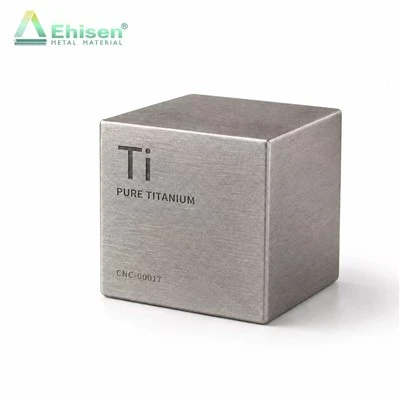
Titanium is a metal element with chemical symbol Ti and atomic number 22. It belongs to Group IVB metal elements on the periodic table of elements. The melting point of titanium is 1660℃, the boiling point is 3287℃, and the density is 4.54g/cm³. Titanium is a gray transition metal characterized by light weight, high strength, and good corrosion resistance. Due to its stable chemical properties, good resistance to high temperatures, low temperatures, strong acid and alkali resistance, as well as high strength and low density, it is known as "space metal". The most common compound of titanium is titanium dioxide (commonly known as titanium dioxide), and other compounds include titanium tetrachloride and titanium trichloride. Titanium is one of the most widely distributed and abundant elements in the earth's crust, accounting for 0.16% of the mass of the earth's crust, ranking ninth. The main minerals of titanium are ilmenite and rutile. The two most prominent advantages of titanium are high specific strength and strong corrosion resistance, which determines that titanium will have broad application prospects in aerospace, weapons and equipment, energy, chemical industry, metallurgy, construction and transportation. Abundant reserves provide a resource base for the wide application of titanium.

Tungsten Processed Products
The element symbol W, atomic number 74 in the periodic table, is a metal in Group VIB. The density is 19.35 grams/cubic centimeter, which is close to gold. The melting point is 3422°C and the boiling point is 5927°C. Tungsten is a silver-white metal that looks like steel. It has the highest melting point among all metal elements and has a slow evaporation rate. The chemical properties of tungsten are very stable. It does not react with air and water at room temperature. It does not react with hydrochloric acid, sulfuric acid, nitric acid, or hydrofluoric acid of any concentration, but it can be quickly dissolved in a mixed acid of hydrofluoric acid and concentrated nitric acid. It has no effect in alkaline solutions. The content of tungsten in the earth's crust is 0.001%. There are more than 20 kinds of tungsten minerals and tungsten-containing minerals that have been discovered. However, among them, only wolframite and scheelite have economic value for mining. Wolframite accounts for about the world's total tungsten resources. 30% of the total, scheelite accounts for about 70%. Tungsten is widely used in alloys, electronics, chemical industry and other fields due to its high melting point, high hardness, high density, good electrical and thermal conductivity, and small expansion coefficient.

Zirconium
Zirconium is a metal element with the element symbol Zr. It is located in Group IV-B in the periodic table of elements. Its atomic number is 40, its density is 6.49g/cm³, its melting point is 1852°C, and its boiling point is 4377°C. Zirconium is a silver-white transition metal that is often called a "rare metal" because of its complex production process and difficulty in extraction. In fact, the content of zirconium in the earth's crust is about 0.025%, ranking 19th, almost equal to chromium, and more than common metals copper, lead, nickel, and zinc, but its distribution is very scattered. Zirconium easily forms an oxide film on its surface in the air, which is shiny and similar in appearance to steel. Zirconium has corrosion resistance, but is soluble in hydrofluoric acid and aqua regia; at high temperatures, it can react with many elements to form solid solution compounds. The corrosion resistance of zirconium is better than that of titanium, and is close to tantalum and niobium. In view of the good plasticity of zirconium, it is often processed into plates, wires, etc. Zirconium can absorb a large amount of oxygen, hydrogen, nitrogen and other gases when heated, and can be used as a hydrogen storage material. As a relatively scarce resource, zirconium is widely used in electronics, ceramics, glass, petrochemicals, building materials, medicine, textiles and daily necessities. Australia and South Africa are where zirconium resources are concentrated, while China and Europe are the main consumer areas of zirconium.

Nickel
The element symbol is Ni, the atomic number in the periodic table is 28, the relative atomic mass is 58.69, and it is a Group VIII metal. Density 8.9g/cm³, melting point 1455℃, boiling point 2730℃. Nickel is a silver-white metal that is easily oxidized in the air, forming a somewhat black oxide film on the surface, so the nickel people see is often black in color. Nickel is hard, very malleable, magnetic and corrosion-resistant, and can be highly polished. Nickel is also very abundant in the earth's crust. It exists in nature in the form of nickel silicate or sulfur, arsenic, and nickel compounds. Nickel is often used in the manufacturing of stainless steel, alloy structural steel and other steel fields, electroplating, high-nickel-based alloys and batteries. It is widely used in various military manufacturing industries such as aircraft and radar, civil machinery manufacturing and electroplating industries.

Niobium
Element symbol: Nb, atomic number 41, is a VB group metal. The density of niobium is 8.57g/cm³, the melting point is 2477°C, and the boiling point is 4744°C. Niobium is a rare, silvery-gray, soft, malleable metal with a high melting point. At room temperature, niobium does not react with air and will not be completely oxidized when heated in oxygen. Niobium can directly combine with sulfur, nitrogen and carbon at high temperatures. Niobium does not react with inorganic acids or bases and is not soluble in aqua regia, but is soluble in hydrofluoric acid. The content of niobium in the earth's crust is 20 ppm, and the distribution of niobium resources is relatively concentrated. Because niobium has good superconductivity, high melting point, corrosion resistance, wear resistance and other characteristics, it is widely used in steel, superconducting materials, aerospace, atomic energy and other fields.
Tantalum
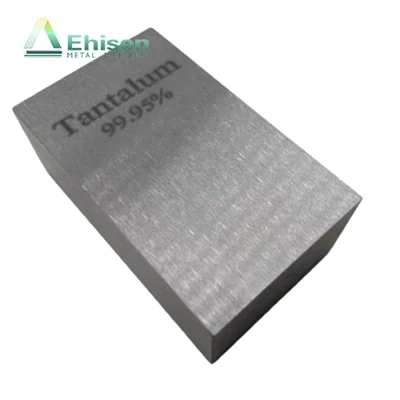
Tantalum is a metal element with the element symbol Ta, atomic number 73, density 16.68g/cm³, and melting point 2980°C. It is the third most refractory metal after tungsten and rhenium. Pure tantalum has a slightly blue color and excellent ductility. It can be rolled into very thin (less than 0.01 mm) plates without intermediate annealing in the cold state. Tantalum's corrosion resistance is the same as that of glass. At medium temperatures (about 150°C), only fluorine, hydrofluoric acid, sulfur trioxide (including fuming sulfuric acid), strong alkali and certain molten salts have an impact on tantalum. Metal tantalum is stable in air at room temperature. When heated above 500°C, it accelerates oxidation to form Ta205. Tantalum has a series of excellent properties such as high melting point, low vapor pressure, good cold working performance, high chemical stability, strong resistance to liquid metal corrosion, and large dielectric constant of surface oxide film. It is widely used in electronics, metallurgy, steel, chemical industry, cemented carbide, It has important applications in high-tech fields such as atomic energy, superconducting technology, automotive electronics, aerospace, medical and health care, and scientific research. At present, the most important application of tantalum is tantalum capacitors. Tantalum must appear in nature together with niobium, which has similar chemical properties, and is generally found in tantalite, columbite and coltan. Brazil and Australia are the two countries with the richest tantalum resources.
Click on the product list below for more product details





Features
Molybdenum


Titanium


Tungsten

High melting point

High hardness

Excellent corrosion resistance

Good electrical and thermal conductivity
Zirconium


Nickel


Niobium


Tantalum

Moderate hardness

Highly malleable

Small thermal expansion coefficient

Corrosion resistance
Applications
Molybdenum


Titanium


Tungsten


Zirconium


Nickel


Niobium


Tantalum


About Us
20+
Senior technical engineer
500+
Global customers
2000+
Factory land occupation
10+
Utility model patent
Honor and qualification
Official certification, professional after sales service.


cooperative partner
We are looking for a cooperative partner to expand our business.


Processing Equipment

Melting Equipment

Forging Equipment

Pickling Production Line

Plate Rolling Equipment

Stamping Equipment

Surface Treatment Equipment

Machining Center

Chemistry Lab
Detection Process

Dimensional Test

Grain Size Test

Plate Tensile Test

Flaw Detection

Three-coordinate Optical Measuring Machine

CMM

Anode Strengthening Life Test

Anode Composition Test
Why Choose Us
why choose us
ADVANCED EQUIPMENT
Ehisen has multiple processing equipment to quickly provide products to customers
Perfect Sales Service:
Ehisen provides you with one-stop non-ferrous metal production, processing, after-sales, and other supporting services
Quality Advantage:
Strictly control quality, guaranteed quality, and high processing precision
Price Advantage
High-cost performance, all products are produced independently
Complete Manufacturing Proficiency
Top-notch titanium items covering all grades are offered in a range of forms, such as plates, flanges, rods, bolts, and tube fittings.
Personalized Solutions For Metal Processing Products
Our unique, near-net-shape metal fabrication services can help you achieve greater value from your Metal Processing Products .
Confidentiality Advantage:
After signing a confidentiality agreement, non-relevant personnel cannot enter the workshop at will, making proofing more secure.
Economical Production Solutions
Discover specialized, affordable manufacturing options for an extensive array of titanium items. Our LOW MOQ ensures excellent quality at an affordable price.
Contact Us
we are here for you
+86 15619363855 Edward Wu
+86 18700703333 Elsa lin
+86 15291791403
Eve Zhang
The pictures come from the Internet. If there is any infringement, please contact me to delete it.
As one of the leading metal processing products manufacturers and suppliers in China, we warmly welcome you to buy or wholesale bulk high purity metal processing products at competitive price from our factory. Contact us for quotation and free sample.
metal rods, metal housings, metal frames