


Products Description

The Ru-Ir Titanium Anode Plate is a dimensionally stable anode (DSA) engineered for the electrochemical production of chlorine and sodium hypochlorite (NaOCl) from seawater and brackish water. It consists of a Grade 1/2 pure titanium substrate coated with a ruthenium–iridium mixed metal oxide (RuO₂–IrO₂) layer, applied through a multi-layer brush-coating and thermal-decomposition process.
This anode serves as the core component of electrochlorination systems, including Marine Growth Prevention Systems (MGPS), offshore platform firewater networks, power plant cooling water treatment, and desalination pretreatment units - wherever on-site, on-demand chlorine generation from seawater is required.
Products Key Benefits
✅ High chlorine evolution efficiency (≥ 90%), suppressing oxygen evolution
✅ Low chlorine evolution overpotential - reduced cell voltage and power consumption
✅ Long service life: 3–8 years depending on operating conditions
✅ Excellent corrosion resistance in high-chloride media
✅ Dimensionally stable - no passivation, no redissolution of substrate
✅ Fully customizable geometry, coating loading, and connection design

Products Parameters
| Item | Renovated Atdartment |
| Substrate Material | Titanium Grade 1 / Grade 2 (ASTM B265) |
| Substrate Thickness | 0.5 – 5.0 mm (typical: 1.0 – 3.0 mm) |
| Coating Composition | Ru/Ir |
| Precious Metal Loading | 8 – 22 g/m² (customizable) |
| Chlorine Evolution Potential | ≤ 1.13 V vs. SCE (in seawater @ 1,000 A/m²) |
| Chlorine Current Efficiency | ≥ 90% |
| Rated Current Density | 500 – 3,000 A/m² (recommended: 1,000 – 2,000 A/m²) |
| Applicable Chloride Concentration | 5,000 – 38,000 mg/L (brackish water to natural seawater) |
| Operating Temperature | 5 – 45 °C |
| Operating pH | 6.0 – 8.5 |
| Polarity | Unipolar (single-direction); bi-polar configuration availa |
| Design Service Life | 3 – 8 years (condition dependent) |
| Dimensions | Up to 2,000 × 1,000 mm (larger sizes welded) |
Products Application
Ru-Ir coated titanium anodes are widely used in seawater electrolysis systems for on-site chlorine generation.
In these systems, seawater is used as the chloride-containing electrolyte. When DC current is applied, chloride ions are oxidized at the titanium anode to generate chlorine-containing active species.
The generated active chlorine can then be used directly for seawater disinfection and biofouling control.

Working Principle
Seawater contains approximately 20,000 mg/L of chloride ions (Cl⁻). Under DC current, the electrochlorination cell generates available chlorine directly on-site:
The RuO₂–IrO₂ coating lowers the chlorine evolution overpotential and kinetically suppresses the competing oxygen evolution reaction (OER), ensuring the current is used to generate active chlorine (Cl₂ / HOCl / OCl⁻) rather than oxygen - the key to high current efficiency and low specific energy consumption.
fAQ
Q: What is the expected service life in a seawater MGPS system?
A: Typically 5–8 years at 1,000–2,000 A/m² in natural seawater with proper operation. Life is influenced by current density, chloride concentration, temperature, and shutdown frequency.
Q: Can you match our existing electrolyzer design?
A: Yes. Send us your drawing (STEP/DWG/PDF), electrode dimensions, connection method, and operating parameters - we produce 1:1 replacements, including retrofit for major OEM cells.
Q: Ru-Ir coating vs. Ir-Ta coating - which should I choose?
A: For seawater chlorination (chlorine evolution), Ru-Ir is the standard choice due to high Cl⁻ selectivity and low overpotential. Ir-Ta is preferred for oxygen evolution applications (e.g., electro-oxidation of wastewater). We offer both.
Q: Ru-Ir coating vs. Ir-Ta coating - which should I choose?
A: Yes - sample electrodes (e.g., 100 × 100 mm or your specified size) are available for lab or pilot verification.
Q: Do you supply matching cathodes?
A: Yes. Titanium (or coated titanium) cathode plates, as well as complete electrode sets and spares (gaskets, busbars, fasteners) for your system.
about Us
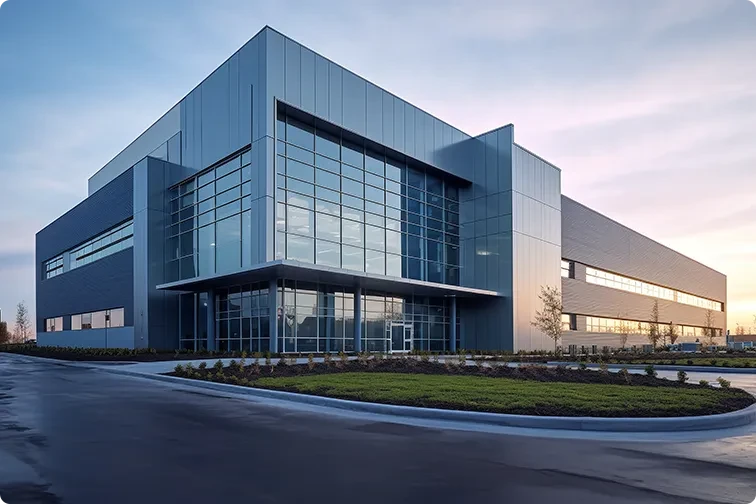
Ehisen was established in 2004 as a high-tech company specializing in the manufacturing of sophisticated metal materials, including melting, profiling, machining, and research and development of precious metal anodes.Our company, which employs 50 people and occupies a 15 mu area, is focused on innovative manufacturing. Located in Baoji City, Shaanxi Province-also referred to as the "Titanium Valley of China"-the enterprise benefits from a whole industrial chain for metal processing.In order to create an innovation platform and create cutting-edge new energy accessories, we collaborate with nearby businesses.Our primary goals are to deliver high-quality goods and services, such as specialized metal deep process components, support for research and development, and modular product design and manufacturing.
Our Certificate


Packaging & Shipping

Titanium anodes are carefully packaged to prevent mechanical damage during transportation.
Typical packaging includes:
Protective film or suitable surface protection
Individual separation
Shock-resistant packing materials
Customized wooden cases/cartons
Moisture protection when required
Export-standard packaging
Special packaging requirements can be accommodated for large plate electrodes or complete electrode assemblies.
Contact Us
we are here for you
Hot Tags: ruthenium-iridium coated titanium anode for seawater electrolysis chlorination, China ruthenium-iridium coated titanium anode for seawater electrolysis chlorination manufacturers, suppliers, factory, acid resistant precious metal anode, bacteria resistant precious metal anode, eco friendly precious metal anode, end of life precious metal anode, oil resistant precious metal anode, Platinum Plated Anode for Hydrogen Rich Water Cups