

Your Trusted Supplier Of Titanium Processed Products
What is Titanium

Titanium is a metal element with chemical symbol Ti and atomic number 22. It belongs to Group IVB metal elements on the periodic table of elements. The melting point of titanium is 1660℃, the boiling point is 3287℃, and the density is 4.54g/cm³. Titanium is a gray transition metal characterized by light weight, high strength, and good corrosion resistance. Due to its stable chemical properties, good resistance to high temperatures, low temperatures, strong acid and alkali resistance, as well as high strength and low density, it is known as "space metal". The most common compound of titanium is titanium dioxide (commonly known as titanium dioxide), and other compounds include titanium tetrachloride and titanium trichloride. Titanium is one of the most widely distributed and abundant elements in the earth's crust, accounting for 0.16% of the mass of the earth's crust, ranking ninth. The main minerals of titanium are ilmenite and rutile. The two most prominent advantages of titanium are high specific strength and strong corrosion resistance, which determines that titanium will have broad application prospects in aerospace, weapons and equipment, energy, chemical industry, metallurgy, construction and transportation. Abundant reserves provide a resource base for the wide application of titanium.
Titanium Processed Products
Titanium Beads
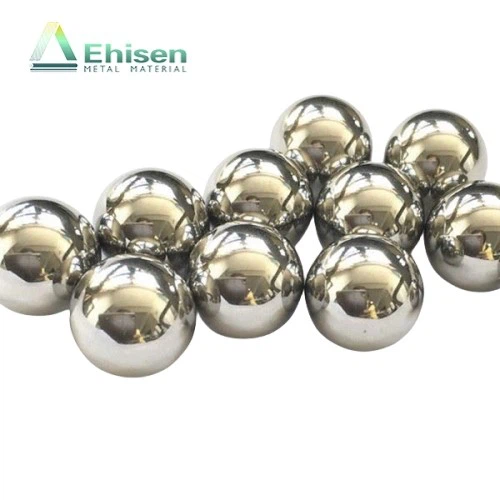
Titanium beads are spherical objects made of titanium. Titanium is a chemical element with the symbol Ti and atomic number 22. It is a strong, lightweight, and corrosion-resistant metal used in a variety of industries, including aerospace, medical implants, and sports equipment.
|
Product |
titanium beads |
|
size |
Diameter 4mm, Other sizes available: from 2mm 3mm 4mm 5mm 6mm 8mm 10mm 12mm 14mm 15mm 16mm 18mm 20mm and above |
|
Material |
titanium metal |
|
Titanium grade |
most popular : grade 1 grade 2 grade 5 grade 23 |
|
Color |
titanium metal color, black, gold, green, blue, red, rainbow, purple |
|
MOQ |
No MOQ for readay goods, 100pcs when request sizes sold out |
|
Delivery time |
within 48 hours for ready goods, about 10-25 workdays for making prducts |
Medical Nitinol Wire

Nitinol has many uses in the medical industry because of its compatibility with the human body and its exceptional ability to handle extreme stress. The ultra-fine wire used to make stents, orthodontic wires, catheters and other surgical implants is ultimately woven into these products.
The selection of braided or coiled reinforced catheter for a given application should be made by the medical device manufacturer. Today, many OEMs choose to use nickel-titanium alloys to manufacture coiled catheters during very delicate surgeries or other situations where precision is critical, such as cardiovascular or brain surgery. The benefit of this is that NiTi alloys are extremely flexible. It behaves almost like a spring and can be stretched to a great extent before springing back into place. This is very helpful in the medical industry since it often involves the bending and twisting of arteries.
|
Compound Formula |
NiTi |
|
Appearance |
Metallic solid in various forms |
|
Melting Point |
1300 °C |
|
Boiling Point |
N/A |
|
Density |
6.45 g/cm3 |
|
Solubility in H2O |
N/A |
|
Poisson's Ratio |
0.33 |
|
Specific Heat |
0.20 cal/g·°C |
|
Tensile Strength |
895 MPa (Ultimate, fully annealed) |
|
Thermal Conductivity |
0.18 W/cm (austenite), 0.086 W/cm (martensite) |
|
Thermal Expansion |
11.0 x 10⁻⁶/°C (austenite), 6.6 x 10⁻⁶/°C (austenite) |
Titanium Fittings

Titanium fittings are specialized components used to connect or redirect pipes and pipes in fluid systems. Titanium fittings are known for their strength, corrosion resistance and lightweight design, ensuring leak-free connections and optimal flow. These accessories are widely used in industries such as aerospace and medical to maintain system integrity and efficiency, especially in demanding applications.
|
Standard |
ASTM B363/ASME SB363 |
|
Grades |
▲ Gr1, Gr2, Gr3, Gr4 ▲ Gr5 (Ti-6Al-4V) ▲ Gr7 (Ti-0.2Pd) ▲ Gr9 (Ti-3Al-2.5V) ▲ Gr12 (Ti-0.3Mo-0.8Ni) ▲ Gr23 (Ti-6Al-4V ELI) |
|
Size |
1/2″ – 48″(DN15-1200) or customized |
|
Technical |
Stamped, Seamless, Prefabricated Titanium Fittings |
|
Chamber wall thickness |
Sch10s,20,30,40s etc |
|
Material Test Report |
EN10204.3.1, Chemical Composition And Physical Properties |
|
Form |
Titanium Elbows, Titanium Tree, Titanium Reducer, Titanium Stub Ends, Titanium End Caps, Titanium Bends |
|
Application |
Petroleum, Chemical Industry, Chlorella, Metallurgy, Carbonization, Refrigeration, Light Industry, Salt Industry, Electric Power |
Titanium Flange

Titanium flanges are specialized components used to connect pipes, valves or other equipment in various industries. It has a flat or raised surface with bolt holes for a secure and leak-proof connection.
|
Standard |
ASTM / ASME B381 / SB381/DIN/GB/ISO/JIS/BA/ANSI |
|
Grade |
Gr1, Gr2, Gr3, Gr4 Gr5 (Ti-6Al-4V) Gr7 (Ti-0.2Pd) Gr9 (Ti-3Al-2.5V) Gr12 (Ti-0.3Mo-0.8Ni) Gr23 (Ti-6Al-4V ELI) |
|
Titanium Flange Size |
1/2″ (15 NB) to 48″ (1200NB) |
|
Size Scope |
Bolt Size: M1.6~22 Length Nut Size: M3~30 Washer Size: M3~30 Flange Size: DN10~1000/1/2″-80″ |
|
Technical |
Forging, Cutting rolling, and CNC machining |
|
Surface Treatment |
Transparent oil, Rust-proof oil, Hot galvanizing, Polishing, Burned |
|
Main Flange Type |
Forged/Threaded/Screwed/Plate |
|
Flange Form |
Slip On Flanges, Socket Weld Flanges, Forged Flanges, Blind Flanges, Welding Neck Flanges, Ring Type Joint Flange, Spectacle Blind Flanges, Reducing Flanges, Threaded / Screwed Flanges, Tongue and Groove Flanges, Long Weld Neck Flanges, Plate Flanges |
|
Features of Titanium Flange |
Low density and High Specific Strength Excellent Corrosive Resistance The use of long cycle Good thermal properties |
|
Application |
Metallurgy, electronics, medical, chemical, petroleum, pharmaceutical, aerospace, etc. |
Titanium Metal Cube

Titanium metal cubes are a type of cubic metal that is highly regarded in various industries. They are lightweight, strong, corrosion-resistant, and non-toxic, making them an ideal choice for many applications.
One of the most significant advantages of titanium cubes is their low weight. As one of the lightest metals, titanium has a density of 4.5 g/cm³, which is only about 60 percent that of steel. This property makes titanium cubes a popular choice in aerospace, where lightness is crucial for fuel efficiency and maneuverability.
|
name |
Titanium metal cube |
|
Appearance |
Silvery cubes |
|
Melting Point |
1668 °C |
|
Boiling Point |
3560 °C |
|
Density |
4.51g/cm3 |
|
Solubility in H2O |
N/A |
|
Crystal Phase / Structure |
Hexagonal |
|
Electrical Resistivity |
42.0 microhm-cm @ 20 °C |
|
Electronegativity |
1.45 Paulings |
|
Heat of Fusion |
14.15 kJ/mol |
|
Heat of Vaporization |
425 kJ/mol |
|
Poisson's Ratio |
0.32 |
|
Specific Heat |
0.125 Cal/g/K @ 25 °C |
|
Tensile Strength |
140 MPa |
|
Thermal Conductivity |
21.9 W/(m·K) @ 298.2 K |
|
Thermal Expansion |
8.6 µm·m-1·K-1 (25 °C) |
|
Young's Modulus |
116 GPa |
|
Vickers Hardness |
830–3420 MPa |
Titanium Foils

Titanium foil is a slender sheet of titanium metal known for its excellent strength-to-weight ratio and impressive corrosion resistance. Its durability and compatibility with living tissue have led to its prominence in various industries including aerospace, medicine, and electronics.
| Titanium type | Description | Application areas |
| Ultra-thin titanium foil | A thin plate with a thickness less than 0.1 mm | Precision instruments, micro components and precision assemblies. |
| Titanium Strip Narrow strip | Thickness from 0.1 mm to 0.3 mm and width up to 500 mm.Usually in roll form. | Electronic equipment, connectors and specialized mechanical components. |
| Titanium Coils Wider strips | With thicknesses from 0.3mm to 4.75mm and widths over 500mm. | Automotive exhaust systems, aircraft structures and heavy equipment. |
Medical Titanium Rod

It is a material formed by rolling or extrusion of titanium and titanium alloys, commonly including pure titanium rods and titanium alloy rods. Process flow: raw materials - preliminary treatment - rolling - heat treatment - straightening - post treatment - inspection - packaging - warehousing. The titanium rod has excellent heat resistance, with a melting point of up to 1725 ℃. At room temperature, titanium can resist corrosion in various strong acid and alkali solutions, even aqua regia cannot corrode it. Due to its corrosion resistance, titanium is often used in the chemical industry. In the past, the components containing hot nitric acid in chemical reactors were made of stainless steel. Stainless steel cannot resist the strong corrosive agent - hot nitric acid, and most components need to be replaced every six months. Nowadays, using titanium to manufacture these components, although it is more expensive than stainless steel components, it can be continuously replaced and used for five to 10 years, which reduces the annual cost sharing significantly.
|
Mechanical properties |
|||||
|
Grade |
Diameter (mm) |
Tensile Strength (Rm/Mpa) ≥ |
Yield Strength (Rp0.2/Mpa) ≥ |
Elongation (A%) ≥ |
Reduction of Area (Z%) ≥ |
|
ASTMF136 |
<44.45 |
860 |
795 |
10 |
25 |
|
ASTMF136 |
44.45-63.5 |
825 |
760 |
8 |
20 |
|
ASTMF136 |
63.5-101.6 |
825 |
760 |
8 |
15 |
Click on the product list below for more product details


Customized Titanium Solutions to Your Projects

Our advantage
We at Ehisen Metal are really proud to provide an extensive range of services for titanium customizing. Our experienced staff and cutting-edge infrastructure guarantee that every client's need is satisfied precisely and to the highest standard. What we can do for you is as follows:
Titanium machining
CNC machines are used for precise drilling, boring, and milling.
Skilled bending
Skilled bending, folding, and welding methods are used in the fabrication of titanium.
Titanium Forming
Titanium Forming: Sophisticated hot and cold extrusion and forging.
Surface treatments
Surface treatments include etching, anodizing, and polishing for longevity and aesthetic appeal.
Assembly and Inspection
Assembly and Inspection: Methods of joining and exacting quality examinations.
Custom Titanium Components
Aerospace parts, medical implants, and bolts are examples of custom titanium components.
Titanium finishing
Titanium finishing: For protection, galvanizing and powder coating are used.
Specialized Alloys
Special alloy composition and thermal processing.
Products Features

Superior Corrosion Resistance: Titanium is the ideal material for maritime applications since it resists corrosion so effectively in seawater.
Robust Strength: Titanium has excellent formability and retains its stiffness after forming, in addition to its remarkable tensile and yield strengths.
Biocompatibility: Titanium is a body-friendly material that poses no health risks in everyday or medical uses because it is free of dangerous metals.
Efficient Heat Conduction: The inherent properties of titanium allow for thinner construction compared to many metals. Its resistance to scaling also means heat is transmitted more efficiently.
Endurance at High Temperatures: With a melting point of 1668°C, titanium maintains its integrity even at 600°C for extended durations and remains undeformed after exposure to open flames.
Light yet Strong: Although denser than aluminum, titanium is lighter than steel. This implies titanium components give strength comparable to steel but at a fraction of the weight.
Natural Antimicrobial Features: Research shows that titanium has a special capacity to stop the growth of bacteria. It is difficult for dangerous microbes to flourish in titanium environments.
Performance in Cold Climates: The strength of titanium increases with decreasing temperatures. It exhibits exceptional toughness and ductility even at a freezing -235°C, avoiding the dangers of cold brittleness.
Attractiveness: Titanium's oxide layer can produce a variety of colors, adding to its visual appeal. It is both elegant and useful because of its visual adaptability without requiring more upkeep.
Why is Titanium so Expensive?
Extraction Method: Because titanium is highly reactive with carbon, it cannot be extracted using a blast furnace, in contrast to other metals like copper or aluminum. Instead, titanium is extracted using the expensive and labor-intensive Kroll process. The creation of around 99 percent of the titanium produced worldwide comes from this procedure.
Energy Consumption: The Kroll process uses a significant amount of energy. The high energy consumption in the manufacturing of titanium raises the material's overall cost since energy expenditures account for a large amount of production expenses.
Scarcity of Raw Materials: Although titanium is the ninth most plentiful element in the universe, it is difficult to locate and mine high-grade, economically viable titanium ore resources.
Comparing the Price of Titanium with Other Metals: The price of titanium is clearly higher than that of other metals. For example, the price of aluminum is about $1/kg, the price of copper is $8/kg, and the price of titanium is an astounding $25/kg.

Commercial Grades of Titanium
Commercial grades of titanium, a remarkable metal noted for its strength and resistance to corrosion, are available. Because each grade has various qualities, it can be used for different applications:
|
Grade |
Key Features |
Common Applications |
|
Grade 1 |
– Softest titanium grade |
– Architecture |
|
Grade 2 |
– Unalloyed titanium |
– Chemical processes |
|
Grade 3 |
– Stronger than Grade 1 and 2 |
– Aerospace structures |
|
Grade 4 |
– Strongest unalloyed grade |
– Aerospace |
|
Grade 5 (Ti 6Al-4V) |
– Alloyed with aluminum and vanadium |
– Aerospace components |
|
Grade 7 |
– Enhanced with palladium |
– Suitable against reducing acids |
|
Grade 9 (Ti-3Al-2.5V) |
– Alloy with aluminum and vanadium |
– Aircraft turbines |
|
Grade 12 |
– Contains molybdenum and nickel |
– Chemical processes |
Commercial Pure Titanium (CP Titanium) vs. Titanium Alloys


|
Feature/Property |
Commercial Pure Titanium |
Titanium Alloys |
|
|
Composition |
Titanium in its pure form |
Combination of titanium with other metals (e.g., Al, V, Mo) |
|
|
Strength |
Varies based on grade (Grade 1 being the softest to Grade 4 being the hardest) |
Generally higher than CP Titanium (e.g., Ti-6Al-4V) |
|
|
Corrosion Resistance |
High resistance, especially in environments like seawater or chlorides |
Comparable but may vary based on alloy constituents |
|
|
Ductility |
High ductility suitable for deep drawing or spinning |
Varies; can be less ductile than CP Titanium |
|
|
Biocompatibility |
High (used in medical applications) |
Specific alloys used in medical applications due to biocompatibility |
|
|
High-Temperature Performance |
Good performance, but alloys can be better for very high temperatures |
Enhanced resistance to high temperatures, especially in aerospace applications |
Titanium Alloy Grades
Titanium Alloy Grades
|
Grade |
Alloying Elements |
Key Features |
Common Applications |
|
Ti-6Al-4V (Grade 5) |
Aluminum, Vanadium |
Most commonly used; High strength |
Aerospace structures, turbine blades, medical implants |
|
Ti-5Al-2.5Sn (Grade 6) |
Aluminum, Tin |
Excellent stability and strength up to 400°C |
Engine components, airframes |
|
Ti-0.3Mo-0.8Ni (Grade 12) |
Molybdenum, Nickel |
Superior corrosion resistance |
Chemical processing applications |
|
Ti-3Al-2.5V (Grade 9) |
Aluminum, Vanadium |
Balanced strength, ductility, and weldability |
Bicycle frames, golf clubs |
|
Ti-15V-3Cr-3Al-3Sn |
Vanadium, Chromium, Aluminum, Tin |
High strength and corrosion resistance |
Aircraft components |
Application of titanium

Aerospace industry


Precautions When Purchasing Titanium Products
Grade and Type:
Different grades of titanium are available, each designed for a particular use. Knowing the grade and its characteristics is essential, whether the goal is commercial purity or a particular alloy grade appropriate for high-temperature settings.
01
Purity and Composition
Make sure the titanium product complies with industry standards for both purity and alloy composition, as these factors have a big impact on how well it works.
02
Application:
Describe the titanium product's main use. The appropriate grade and kind will be determined by the application, whether it is for construction, medical implants, or aerospace.
03
Dimensional Accuracy:
Verify that the product's measurements—such as its thickness, length, and diameter—meet the specifications for your project.
04
Strength and Durability:
Specific tensile strength, fatigue resistance, and corrosion resistance may be needed depending on the intended use of the titanium.
05

Certifications:
Reputable suppliers offer certifications attesting to the product's quality, origin, and compliance with industry standards.
06
Supplier Reputation
Verify the supplier's standing in the market by looking into their years of operation, customer reviews, and quality assurance procedures.
07
Cost:
Cost: Although titanium can be more expensive than other metals, it's important to weigh the advantages it offers, like strength, durability, and resistance properties.
08
Post-Purchase Support
Verify whether the supplier provides post-purchase assistance such as customization choices, machining services, or advice on product applications.
09
Delivery and Logistics:
Take into account the supplier's capacity to fulfill delivery dates, particularly if your project has a tight deadline. Additionally, examine their packaging strategies to guarantee product security in transit.
10
About Us
20+
Senior technical engineer
500+
Global customers
2000+
Factory land occupation
10+
Utility model patent
Honor and qualification
Official certification, professional after sales service.


cooperative partner
We are looking for a cooperative partner to expand our business.


Processing Equipment

Melting Equipment

Forging Equipment

Pickling Production Line

Plate Rolling Equipment

Stamping Equipment

Surface Treatment Equipment

Machining Center

Chemistry Lab
Detection Process

Dimensional Test

Grain Size Test

Plate Tensile Test

Flaw Detection

Three-coordinate Optical Measuring Machine

CMM

Anode Strengthening Life Test

Anode Composition Test
Why Choose Us
why choose us
ADVANCED EQUIPMENT
Ehisen has multiple processing equipment to quickly provide products to customers
Perfect Sales Service:
Ehisen provides you with one-stop non-ferrous metal production, processing, after-sales, and other supporting services
Quality Advantage:
Strictly control quality, guaranteed quality, and high processing precision
Price Advantage
High-cost performance, all products are produced independently
Complete Manufacturing Proficiency
Top-notch titanium items covering all grades are offered in a range of forms, such as plates, flanges, rods, bolts, and tube fittings.
Personalized Solutions For Titanium
Our unique, near-net-shape titanium fabrication services can help you achieve greater value from your titanium .
Confidentiality Advantage:
After signing a confidentiality agreement, non-relevant personnel cannot enter the workshop at will, making proofing more secure.
Economical Production Solutions
Discover specialized, affordable manufacturing options for an extensive array of titanium items. Our LOW MOQ ensures excellent quality at an affordable price.
Contact Us
we are here for you
+86 15619363855 Edward Wu
+86 18700703333 Elsa lin
+86 15291791403
Eve Zhang
The pictures come from the Internet. If there is any infringement, please contact me to delete it.
As one of the leading titanium processed products manufacturers and suppliers in China, we warmly welcome you to buy or wholesale bulk high purity titanium processed products at competitive price from our factory. Contact us for quotation and free sample.
titanium table products, titanium die products, titanium trade products