

As a supplier of Metal Plugs for Holes, ensuring the quality of our products is of utmost importance. In this blog, I'll share the comprehensive methods I use to test the quality of these metal plugs, which will not only provide transparency about our quality control process but also help our clients understand the value they're getting when they choose our products.
Visual Inspection
The first step in testing the quality of Metal Plugs for Holes is a thorough visual inspection. This is a simple yet effective method that allows us to quickly identify any obvious defects. During this process, we examine the surface of the metal plugs for scratches, dents, cracks, or any other physical imperfections. These flaws can compromise the functionality and durability of the plugs, so it's crucial to catch them early.
We use bright, even lighting to ensure that every part of the plug is visible. A magnifying glass may also be employed to detect tiny defects that are not easily visible to the naked eye. If a plug fails this visual inspection, it is immediately removed from the production line and marked as a reject. This initial screening helps us maintain a high - quality standard right from the start.
Dimensional Accuracy Testing
Dimensional accuracy is critical for Metal Plugs for Holes. These plugs are designed to fit precisely into specific holes, and even a slight deviation in size can lead to a poor fit, which may cause leakage or other performance issues.
We use precision measuring tools such as calipers, micrometers, and coordinate measuring machines (CMMs). Calipers are used for quick and basic measurements of the outer diameter, inner diameter, and length of the plugs. Micrometers, on the other hand, offer a higher level of accuracy, especially when measuring small dimensions.
CMMs are the most advanced tool in our dimensional testing arsenal. They can measure the geometry of the plugs in three - dimensional space with extremely high precision. By comparing the measured dimensions with the design specifications, we can determine if the plugs meet the required tolerances. Any plugs that fall outside the acceptable range are rejected. This strict control over dimensional accuracy ensures that our Metal Plugs for Holes fit perfectly in their intended applications, whether it's in a Separator for SOFC Stack or other high - precision equipment.
Material Composition Analysis
The quality of Metal Plugs for Holes is highly dependent on the material they are made of. Different applications may require different types of metals with specific properties such as corrosion resistance, high - temperature resistance, and strength.

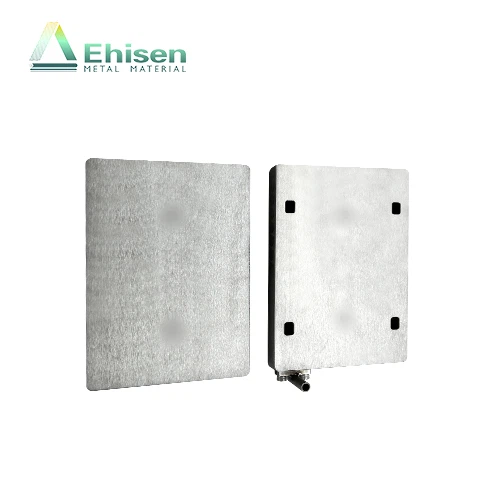
We use various techniques to analyze the material composition of our plugs. One common method is spectroscopy, which can identify the elements present in the metal and their respective concentrations. This helps us verify that the material used in the production of the plugs meets the specified requirements.
For example, if a plug is designed for use in a high - temperature environment, it should be made of a metal alloy with excellent heat resistance. By analyzing the material composition, we can ensure that the plug contains the right combination of elements such as nickel, chromium, and molybdenum, which contribute to its high - temperature performance.
In addition to spectroscopy, we may also conduct hardness testing. Hardness is an important property of metals as it is related to their strength and wear resistance. We use hardness testers such as Rockwell or Brinell testers to measure the hardness of the plugs. If the hardness does not match the expected values for the material, it may indicate a problem with the material or the manufacturing process.
Pressure Testing
Since Metal Plugs for Holes are often used in applications where they need to seal holes and prevent the leakage of fluids or gases, pressure testing is an essential part of our quality control process.
We place the plugs in a specially designed test fixture that simulates the actual operating conditions. The fixture is then pressurized with a fluid or gas to a specified pressure level. We monitor the system for a certain period to check for any signs of leakage.
For example, if the plugs are intended for use in a fuel cell system, we may use a gas such as hydrogen or air for the pressure test. The pressure is gradually increased to a level slightly higher than the expected operating pressure to ensure that the plugs can withstand the stress. If any leakage is detected, the plug is considered defective and is removed from the production batch.
Corrosion Resistance Testing
In many applications, Metal Plugs for Holes are exposed to corrosive environments. Therefore, it's important to test their corrosion resistance to ensure long - term performance.
We use several methods to evaluate the corrosion resistance of our plugs. One common approach is the salt spray test. In this test, the plugs are placed in a chamber where they are exposed to a fine mist of saltwater for a specified period. After the test, we examine the plugs for signs of corrosion, such as rust or pitting.
Another method is the immersion test, where the plugs are immersed in a corrosive solution for an extended period. This test can simulate more severe corrosion conditions and provides a more accurate assessment of the long - term corrosion resistance of the plugs.
If the plugs show excessive corrosion during these tests, it indicates that the material or the surface treatment is not suitable for the intended application. We then make adjustments to the manufacturing process or the material selection to improve the corrosion resistance of the plugs.
Fatigue Testing
In some applications, Metal Plugs for Holes may be subjected to cyclic loading, which can lead to fatigue failure over time. Fatigue testing helps us determine the durability of the plugs under these conditions.
We use a fatigue testing machine to apply a cyclic load to the plugs. The load can be in the form of tension, compression, or bending, depending on the expected operating conditions. The machine applies the load at a specific frequency and amplitude for a large number of cycles.
We monitor the plugs during the test for any signs of cracking or deformation. If a plug fails the fatigue test, it means that it may not be able to withstand the long - term cyclic loading in the actual application. This information helps us improve the design and material selection of the plugs to enhance their fatigue resistance.
Conclusion
Testing the quality of Metal Plugs for Holes is a multi - step process that involves a variety of methods. From visual inspection to advanced material analysis and performance testing, each step is crucial in ensuring that our products meet the highest quality standards.
As a supplier of Metal Plugs for Holes, we are committed to providing our customers with reliable and high - quality products. Our comprehensive quality control process not only helps us maintain our reputation but also gives our customers the confidence that they are getting the best value for their money.
If you are in the market for Metal Plugs for Holes or other related products such as High Temperature Resistant Metal Elbow, we invite you to contact us for more information and to discuss your specific requirements. Our team of experts is ready to assist you in finding the right solutions for your applications.
References
- ASM Handbook Volume 11: Failure Analysis and Prevention. ASM International.
- ASTM Standards for Metal Testing. ASTM International.
- ISO Standards for Quality Management in Manufacturing. International Organization for Standardization.