

Hey there! As a supplier of Titanium Anodes for PCB, I've been getting a lot of questions lately about how the shape of these anodes can impact their performance. Well, I'm here to break it down for you in a way that's easy to understand.
First off, let's talk about why the shape of a titanium anode for PCB matters. In the PCB manufacturing process, the anode plays a crucial role in the electroplating and copper recovery steps. The shape can affect how the current is distributed, the efficiency of the plating process, and even the quality of the final product.
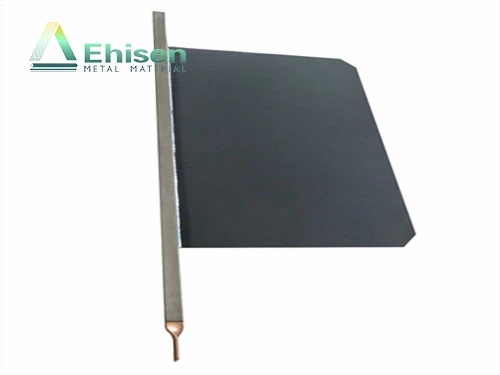
One of the most common shapes for titanium anodes is the flat plate. Flat plate anodes are widely used because they're relatively easy to manufacture and install. They provide a uniform current distribution over a large surface area, which is great for plating large PCBs. However, they do have some limitations. For example, in areas where the current density needs to be higher, like around small vias or intricate patterns, flat plate anodes might not be as effective. The current might spread out too much, leading to uneven plating.

Another popular shape is the tubular anode. Tubular anodes are shaped like cylinders, and they have some unique advantages. They can be placed closer to the PCB, which allows for a more concentrated current flow. This is especially useful for plating small or high - density PCBs. The tubular shape also provides a larger surface area for reaction compared to a flat plate of the same size. This means that more copper ions can be released during the electroplating process, increasing the plating speed. However, tubular anodes can be a bit more difficult to install and maintain, especially in large - scale production lines.
Then there's the mesh - shaped anode. Mesh anodes are made up of a network of thin wires, forming a grid - like structure. They offer a high surface - to - volume ratio, which is excellent for maximizing the reaction area. This results in a more efficient plating process, as more copper ions can be generated per unit of anode material. Mesh anodes are also very flexible and can be customized to fit different PCB shapes and sizes. They're particularly well - suited for plating complex PCB designs with irregular shapes. But, they can be more fragile than flat or tubular anodes, and care must be taken during handling and installation.
Now, let's take a look at how these different shapes affect specific applications.
Vertical Continuous DC Copper Plating
For Titanium Anode For Vertical Continuous DC Copper Plating, the shape of the anode can have a significant impact on the plating quality and speed. In a vertical plating setup, the PCB moves continuously through the plating bath. Flat plate anodes are often used here because they can provide a stable and uniform current across the moving PCB. However, if you're dealing with high - density PCBs, tubular or mesh anodes might be a better choice. Tubular anodes can direct the current more precisely, while mesh anodes can increase the overall reaction efficiency.
Reverse Pulse Copper Plating
In Titanium Anode for Reverse Pulse Copper Plating, the shape of the anode affects how the reverse pulse current is distributed. Reverse pulse plating is used to improve the quality of the copper deposit, such as reducing porosity and improving adhesion. Flat plate anodes can work well for this process, but they might not be able to provide the high - intensity current needed in some areas. Tubular anodes, on the other hand, can create a more concentrated reverse pulse current, which can lead to better plating results. Mesh anodes can also be effective, as their high surface area allows for a more efficient reverse pulse reaction.
Copper Recovery From Etching Solution
When it comes to Titanium Anode for Copper Recovery From Etching Solution, the shape of the anode is crucial for maximizing the copper recovery rate. Flat plate anodes can be used, but they might not be the most efficient option. Tubular anodes can be placed in the etching solution in a way that allows for better contact with the copper ions, increasing the recovery rate. Mesh anodes are also a great choice here, as their large surface area provides more sites for the copper ions to be reduced and recovered.
In addition to the basic shapes, the surface finish of the anode also plays a role in its performance. A smooth surface can reduce the resistance and improve the current flow, while a rough surface can increase the reaction area. Manufacturers often use different surface treatments to optimize the anode's performance for specific applications.
So, how do you choose the right shape of titanium anode for your PCB manufacturing process? It really depends on your specific needs. If you're plating large, simple PCBs, a flat plate anode might be the most cost - effective option. For small, high - density PCBs, tubular or mesh anodes could be a better fit. And if you're focused on copper recovery, tubular or mesh anodes are likely to give you the best results.
As a supplier, I've seen firsthand how the right anode shape can make a huge difference in the PCB manufacturing process. We offer a wide range of titanium anodes in different shapes and sizes to meet the diverse needs of our customers. Whether you're a small - scale PCB manufacturer or a large - scale production facility, we can help you find the perfect anode for your operation.
If you're interested in learning more about our Titanium Anodes for PCB or want to discuss which shape would be best for your specific application, don't hesitate to reach out. We're here to provide you with the best solutions and support to ensure the success of your PCB manufacturing process. Let's work together to take your PCB production to the next level!
References
- "Electroplating for Printed Circuit Boards" - A technical guide on electroplating processes in PCB manufacturing.
- "Advanced Anode Materials for Electrochemical Applications" - A research paper discussing the properties and applications of different anode materials.
- Industry reports on PCB manufacturing trends and technologies.