

What are the optical properties of SOFC/SOEC flange components (if relevant)?
As a leading supplier of SOFC/SOEC flange components, we often encounter inquiries about the various properties of our products, including their optical characteristics. While the primary focus in SOFC (Solid Oxide Fuel Cell) and SOEC (Solid Oxide Electrolysis Cell) systems typically lies in their electrical, thermal, and mechanical properties, understanding the optical properties can also be of significant value, especially in applications where light interaction, monitoring, or high - temperature stability under light exposure are considerations.
1. Basics of SOFC/SOEC Flange Components
SOFCs are devices that convert the chemical energy of a fuel directly into electrical energy through an electrochemical process at high temperatures (typically 600 - 1000°C). SOECs, on the other hand, perform the reverse reaction, using electricity to generate fuel from steam and carbon dioxide. Flange components play a crucial role in these systems. They are used to connect different parts of the fuel cell or electrolysis cell stack, ensuring a tight and reliable seal. This prevents gas leakage, which is essential for the efficient operation of the system.
Our company offers a wide range of flange components, such as Custom Inconel 625 Bellows, SOFC/SOEC Air Pipeline Components, and Thin Wall Metal Tubing. These components are made from high - quality materials chosen for their excellent mechanical and chemical properties under the harsh operating conditions of SOFCs and SOECs.
2. Optical Properties of Materials Used in Flange Components
The optical properties of a material are determined by how it interacts with light. This interaction can be described in terms of absorption, reflection, and transmission. In the context of SOFC/SOEC flange components, the materials commonly used include metals, ceramics, and some composite materials.
Metals
Metals such as stainless steel and the aforementioned Inconel 625 are widely used for flange components due to their high strength, good corrosion resistance, and thermal stability. Metals typically have high reflectivity in the visible light range. This is because the free electrons in metals can easily oscillate in response to the electric field of an incident light wave, causing the light to be reflected. For example, Inconel 625 has a smooth surface finish in our custom - made bellows, which enhances its specular reflectivity.

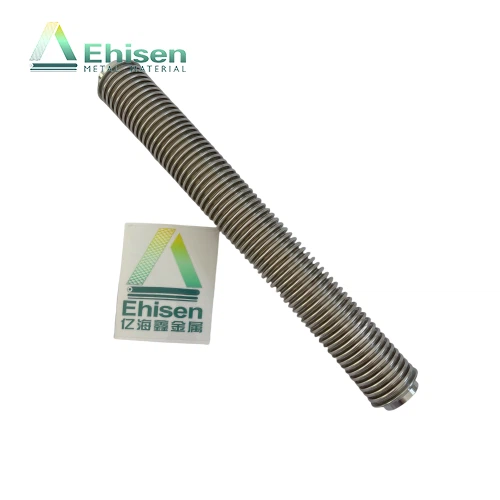
The reflectivity of metals also depends on the wavelength of the incident light. In general, metals reflect more light in the longer - wavelength region of the visible spectrum (red and infrared) compared to the shorter - wavelength region (blue and violet). This property can be important in applications where the flange components are exposed to high - intensity light sources, such as in some high - temperature testing environments. The high reflectivity helps to reduce the amount of light energy absorbed by the material, which in turn minimizes the risk of overheating and potential damage to the component.
Ceramics
Ceramics are another important class of materials used in SOFC/SOEC flange components, especially in applications where high - temperature insulation or chemical stability is required. The optical properties of ceramics depend on their crystal structure, composition, and degree of porosity.
Some ceramics, such as alumina, are relatively transparent in the infrared region. This is because the absorption bands of alumina are mainly in the ultraviolet and some specific infrared wavelengths. The transparency in the infrared can be advantageous in applications where non - contact temperature measurement techniques, such as infrared thermography, are used to monitor the temperature of the flange components during operation. On the other hand, for ceramics with a high degree of porosity, the light scattering can be significant, which reduces the overall transmission and reflection of light. This scattering effect can be used in some optical sensors or filtering applications.
3. Importance of Optical Properties in SOFC/SOEC Systems
The optical properties of flange components can have several implications for the performance and operation of SOFC/SOEC systems.
Temperature Monitoring
As mentioned earlier, the infrared transparency of some ceramic flange components allows for non - contact temperature measurement. This is crucial in SOFC/SOEC systems, where accurate temperature monitoring is essential for optimal performance and to prevent overheating, which can lead to component failure. By using infrared thermography, operators can quickly detect any abnormal temperature distributions in the flange components, enabling timely maintenance and adjustment of the system.
Light - Induced Effects
In some cases, the flange components may be exposed to light sources during the manufacturing process, testing, or in certain operating environments. The optical properties of the materials can affect how they respond to this light exposure. For example, if a metal flange absorbs too much light energy, it can cause thermal expansion, which may lead to misalignment or leakage in the system. Understanding the reflectivity and absorption properties of the materials can help in designing components that are more resistant to light - induced thermal effects.
Visual Inspection
The visual appearance of the flange components is also related to their optical properties. A component with a high - quality surface finish and appropriate reflectivity can be more easily inspected for defects such as cracks or scratches during the manufacturing process and quality control checks. This ensures that only components of the highest quality are used in the SOFC/SOEC systems.
4. Our Approach to Optimizing Optical Properties
At our company, we understand the importance of the optical properties of our SOFC/SOEC flange components. We use advanced manufacturing techniques to control the surface finish and material properties of our products.
For metal components like the Custom Inconel 625 Bellows, we employ precision machining and polishing processes to achieve a smooth surface, which enhances the reflectivity and reduces light absorption. This not only improves the component's resistance to light - induced thermal effects but also gives it a more aesthetically pleasing appearance.
In the case of ceramic components, we carefully select the raw materials and control the sintering process to optimize the crystal structure and porosity. This allows us to tailor the infrared transparency or light - scattering properties according to the specific requirements of the application.
5. Contact for Procurement and Collaboration
If you are in the market for high - quality SOFC/SOEC flange components, we invite you to engage with us. Our team of experts is always ready to discuss your specific needs and provide customized solutions. Whether you require components with specific optical properties or other performance characteristics, we have the capabilities and experience to meet your requirements. Reach out to us to initiate a conversation about your procurement needs and explore potential collaborations in the exciting field of SOFC and SOEC technology.
References
[1] Singhal, S. C., & Kendall, K. (Eds.). (2003). High - Temperature Solid Oxide Fuel Cells: Fundamentals, Design, and Applications. Elsevier.
[2] Minh, N. Q., & Takahashi, T. (Eds.). (1995). Science and Technology of Ceramic Fuel Cells. Elsevier.
[3] Ormerod, R. M. (2003). Development of ceria - based solid electrolytes for IT - SOFC applications. Solid State Ionics, 162, 1 - 18.