

Hey there! I'm a supplier of SOFC/SOEC Flange Components. In today's blog, I'm gonna chat about how to ensure the safety of these components under high pressure.
First off, let's understand what SOFC and SOEC are. Solid Oxide Fuel Cells (SOFC) and Solid Oxide Electrolysis Cells (SOEC) are cutting - edge technologies in the energy field. SOFCs convert chemical energy into electrical energy, while SOECs do the opposite, using electricity to split water or carbon dioxide into useful gases. Flange components play a crucial role in these systems, connecting different parts and ensuring a proper seal.
Under high - pressure conditions, the safety of SOFC/SOEC flange components is super important. If they fail, it can lead to gas leaks, system malfunctions, and even pose safety hazards. So, how can we make sure they stay safe?

Material Selection
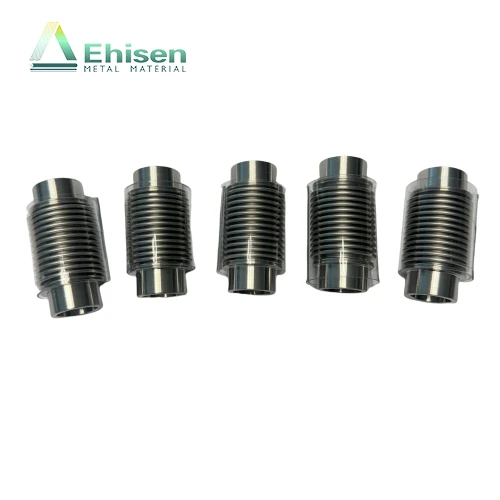
The choice of materials for flange components is the very first step. We need to pick materials that can withstand high pressure, high temperatures, and chemical corrosion. For instance, Inconel 625 Bellows are a great option. Inconel 625 is a nickel - chromium - molybdenum alloy. It has excellent high - temperature strength, good corrosion resistance, and can handle high - pressure environments. This alloy can maintain its mechanical properties even at high temperatures, which is essential for the long - term safety of flange components in SOFC/SOEC systems.
Another aspect to consider is the compatibility of materials. Different parts of the system may be made of different materials, and they need to work well together. For example, if the flange is made of one metal and the connected pipe is made of another, there should be no significant galvanic corrosion between them. Otherwise, it can weaken the components over time and compromise safety.
Design Optimization
The design of the flange components also matters a lot. A well - designed flange should be able to distribute the pressure evenly. Uneven pressure distribution can cause stress concentration in certain areas, leading to cracks and failures.
One common design feature is the use of Bellows For Connection. Bellows can absorb thermal expansion and contraction, as well as vibration and misalignment. They act as a flexible connection between different parts of the system, reducing the stress on the flange. This helps to maintain the integrity of the flange under high pressure and changing operating conditions.
The shape and size of the flange also need to be carefully considered. The bolt holes, for example, should be properly spaced and sized. If the bolts are too close or too far apart, it can affect the clamping force and the sealing performance of the flange.
Manufacturing Quality Control
Once the materials are selected and the design is finalized, the manufacturing process is where the rubber meets the road. High - quality manufacturing is essential for ensuring the safety of flange components.
During the manufacturing process, strict quality control measures should be in place. Forging, machining, and welding are common manufacturing processes for flange components. Each step needs to be carefully monitored. For example, in the welding process, the welding quality can greatly affect the strength and integrity of the component. Welds should be inspected for defects such as cracks, porosity, and lack of fusion.
Non - destructive testing methods, such as ultrasonic testing, X - ray testing, and magnetic particle testing, can be used to detect internal defects in the components. This helps to ensure that only high - quality flange components are delivered to the customers.
Installation and Maintenance
Proper installation is critical for the safety of SOFC/SOEC flange components. Installers need to follow the manufacturer's instructions carefully. The bolts should be tightened to the correct torque value. Over - tightening or under - tightening the bolts can lead to problems. Over - tightening can cause the flange to deform, while under - tightening can result in a poor seal.
In addition to proper installation, regular maintenance is also necessary. The flange components should be inspected regularly for signs of wear, corrosion, or leakage. Any damaged components should be replaced immediately. Monitoring the operating conditions, such as pressure, temperature, and gas composition, can also help to detect potential problems early.
Monitoring and Early Warning
Implementing a monitoring system can provide real - time information about the condition of the flange components. Sensors can be installed to measure parameters such as pressure, temperature, and vibration. By analyzing the data collected from these sensors, we can detect any anomalies in the system.
For example, a sudden increase in vibration may indicate a misalignment or a loose connection. An abnormal change in pressure can be a sign of a leak or a blockage. Once these anomalies are detected, early warning systems can alert the operators, allowing them to take corrective actions before a major problem occurs.
Conclusion
Ensuring the safety of SOFC/SOEC flange components under high pressure is a multi - faceted task. It involves proper material selection, design optimization, high - quality manufacturing, correct installation, regular maintenance, and effective monitoring. As a supplier of SOFC/SOEC Flange Components, we are committed to providing our customers with high - quality products and solutions to meet their safety requirements.
If you're in the market for reliable SOFC/SOEC flange components or have any questions about ensuring their safety, feel free to reach out to us for a purchase negotiation. We'll be more than happy to assist you!
References
- Some textbooks on materials science and engineering for the properties of different alloys.
- Industry standards and guidelines for the design, manufacturing, installation, and maintenance of SOFC/SOEC components.