

As a supplier of Metal Stamping Products, I often encounter inquiries regarding the thermal conductivity requirements for these products. Thermal conductivity is a crucial property that significantly impacts the performance and suitability of metal stamping products in various applications. In this blog post, I will delve into the key requirements for the thermal conductivity of metal stamping products, exploring the factors that influence it and the implications for different industries.
Understanding Thermal Conductivity
Thermal conductivity is a measure of a material's ability to conduct heat. It is defined as the quantity of heat that passes through a unit area of a material in a unit time under a temperature gradient. In the context of metal stamping products, thermal conductivity determines how efficiently heat can be transferred through the material, which is essential for applications such as heat sinks, electronic enclosures, and automotive components.
The thermal conductivity of a material is influenced by several factors, including its chemical composition, crystal structure, and temperature. Metals generally have high thermal conductivity due to the presence of free electrons that can easily transfer heat energy. However, the specific thermal conductivity of a metal can vary depending on its alloying elements and processing history.
Requirements for Different Applications
The thermal conductivity requirements for metal stamping products vary depending on the specific application. Here are some common industries and their associated thermal conductivity requirements:
Electronics
In the electronics industry, metal stamping products are widely used in heat sinks, which are designed to dissipate heat generated by electronic components such as microprocessors and power amplifiers. High thermal conductivity is essential for efficient heat transfer, ensuring that the electronic components operate within their specified temperature range. Materials such as aluminum and copper are commonly used for heat sinks due to their excellent thermal conductivity.
For example, aluminum has a thermal conductivity of approximately 205 W/(m·K), while copper has a thermal conductivity of around 385 W/(m·K). These high thermal conductivity values allow heat to be quickly transferred from the electronic component to the heat sink and then dissipated into the surrounding environment.
Automotive
In the automotive industry, metal stamping products are used in various applications, including engine components, exhaust systems, and cooling systems. Thermal conductivity is crucial in these applications to ensure efficient heat transfer and prevent overheating. For example, in engine components, high thermal conductivity materials can help dissipate heat generated during combustion, reducing the risk of engine damage.
In exhaust systems, metal stamping products need to withstand high temperatures and have good thermal conductivity to transfer heat away from the engine and reduce emissions. Stainless steel is a commonly used material in exhaust systems due to its high temperature resistance and moderate thermal conductivity.
Aerospace
In the aerospace industry, metal stamping products are used in aircraft engines, thermal protection systems, and electronic enclosures. The thermal conductivity requirements in this industry are extremely high due to the harsh operating conditions and the need for lightweight materials. Titanium alloys are often used in aerospace applications due to their high strength-to-weight ratio and good thermal conductivity.
For instance, titanium alloys can have thermal conductivity values ranging from 15 to 25 W/(m·K), which is lower than that of aluminum and copper but still sufficient for many aerospace applications. The use of titanium alloys also helps to reduce the weight of the aircraft, improving fuel efficiency.
Factors Affecting Thermal Conductivity
Several factors can affect the thermal conductivity of metal stamping products. These factors include:
Alloy Composition
The alloy composition of a metal can significantly affect its thermal conductivity. Alloying elements can either increase or decrease the thermal conductivity of a metal depending on their atomic structure and interaction with the host metal. For example, adding small amounts of alloying elements such as silicon or magnesium to aluminum can improve its mechanical properties but may also slightly reduce its thermal conductivity.
Processing History
The processing history of a metal stamping product can also influence its thermal conductivity. Processes such as cold working, heat treatment, and surface finishing can alter the microstructure of the metal, which in turn affects its thermal conductivity. For example, cold working can increase the dislocation density in the metal, which can impede the movement of free electrons and reduce thermal conductivity.
Surface Finish
The surface finish of a metal stamping product can also affect its thermal conductivity. A smooth surface finish can reduce the contact resistance between the metal and the surrounding environment, improving heat transfer. On the other hand, a rough surface finish can increase the contact resistance and reduce thermal conductivity.
Testing and Quality Control
To ensure that metal stamping products meet the required thermal conductivity specifications, it is essential to conduct thorough testing and quality control. There are several methods available for measuring thermal conductivity, including the steady-state method, the transient method, and the laser flash method.
The steady-state method involves measuring the temperature difference across a sample of the material under a constant heat flux. The thermal conductivity is then calculated using Fourier's law of heat conduction. The transient method measures the temperature response of a sample to a sudden heat pulse, allowing the thermal conductivity to be determined based on the rate of heat transfer. The laser flash method is a non-contact method that uses a laser pulse to heat one side of a sample and measures the temperature rise on the other side to determine the thermal diffusivity, which can then be used to calculate the thermal conductivity.

In addition to thermal conductivity testing, it is also important to perform other quality control tests, such as dimensional inspection, material analysis, and mechanical property testing, to ensure that the metal stamping products meet the required specifications.
Our Metal Stamping Products
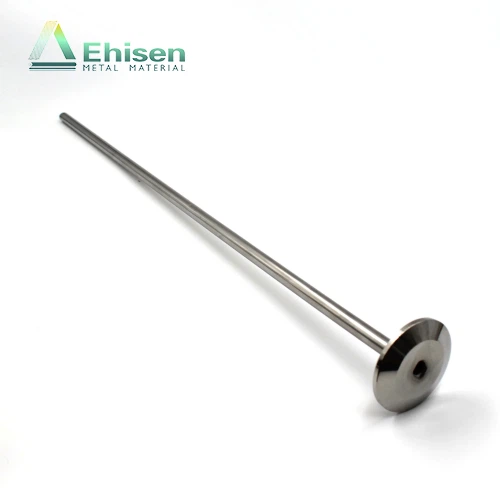
As a supplier of Metal Stamping Products, we offer a wide range of products with different thermal conductivity properties to meet the specific requirements of our customers. Our products include Inconel 601 Thermocouple Casing and Inconel601 Thermowell, which are designed for high-temperature applications requiring excellent thermal conductivity and corrosion resistance.
We also provide custom metal stamping services, allowing us to manufacture products with specific thermal conductivity requirements based on our customers' designs and specifications. Our experienced team of engineers and technicians uses advanced manufacturing techniques and equipment to ensure the highest quality and precision in our products.
If you are interested in our Metal Stamping Products or have any questions about thermal conductivity requirements, please feel free to contact us. We would be happy to discuss your specific needs and provide you with a customized solution.
Conclusion
Thermal conductivity is a critical property for metal stamping products, especially in applications where efficient heat transfer is essential. The requirements for thermal conductivity vary depending on the specific application, and factors such as alloy composition, processing history, and surface finish can significantly affect the thermal conductivity of the material.
As a supplier of Metal Stamping Products, we understand the importance of thermal conductivity and offer a wide range of products with different thermal conductivity properties to meet the specific requirements of our customers. Our commitment to quality and customer satisfaction ensures that our products are reliable and perform as expected in various applications.
If you have any further questions or need more information about our Metal Stamping Products, please do not hesitate to contact us. We look forward to working with you to provide the best solutions for your thermal management needs.
References
- Incropera, F. P., & DeWitt, D. P. (2002). Fundamentals of Heat and Mass Transfer. John Wiley & Sons.
- Callister, W. D., & Rethwisch, D. G. (2012). Materials Science and Engineering: An Introduction. John Wiley & Sons.
- ASM Handbook, Volume 2: Properties and Selection: Nonferrous Alloys and Special-Purpose Materials. ASM International.