

The sandblasting process for titanium and its alloys serves as a critical surface treatment method. Its primary function is to eliminate the oxide layer and contaminants present on the material's surface, enhance surface roughness, strengthen coating adhesion, or impart specific physical and chemical characteristics, ultimately improving the mechanical properties of the material.
This technique utilizes high-speed abrasives propelled by compressed air or water flow to treat the surface of titanium alloys. By effectively removing oxide layers, debris, and impurities, it enhances surface texture and adhesion. Sandblasting is widely applied in the treatment of titanium castings and forgings, ensuring the efficiency and reliability of subsequent processing or coating operations.

The Benefits of Sandblasting for Titanium Alloys
In addition to cleaning and roughening the surface, sandblasting offers the capability to improve the material's microstructure through parameter adjustments. For instance, employing abrasives with diameters ranging from 0.5 to 2 mm can reduce the grain size of titanium alloys to approximately 44 nanometers, leading to enhanced fatigue resistance and stress crack resistance. Moreover, the combination of wet abrasive blasting with ultrasonic vibration not only reduces surface roughness but also extends the lifespan of abrasives and increases localized yield strength.
Sandblasting is indispensable in various industries, such as medical and aerospace applications. In the medical field, sandblasting treatments on implant surfaces expand surface area, facilitating cell adhesion and proliferation and enhancing osseointegration. Similarly, in the integration of composite materials with titanium alloys, sandblasting significantly improves shear strength, ensuring a stronger bond between the composite material and the titanium alloy.
Sandblasting Materials for Titanium and Titanium Alloys
The abrasives commonly utilized in sandblasting titanium and its alloys include white corundum (Al₂O₃) and silica sand, both known for their high hardness and effective cleaning properties. To minimize surface damage, sandblasting pressure is typically maintained below 0.45 MPa. The nozzle-to-workpiece distance is kept between 20 mm and 400 mm, while the spray angle is adjusted within a range of 20° to 70°.
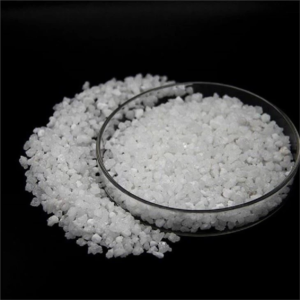
White Corundum (White Alumina)
White corundum, recognized for its exceptional hardness and wear resistance, is particularly well-suited for sandblasting titanium and titanium alloys. This abrasive provides a strong cutting force and grinding effect, making it ideal for treating large surface areas. Its ability to roughen the surface significantly enhances coating adhesion, improving the overall quality and durability of the workpiece. Additionally, the increased surface roughness achieved with white corundum ensures better coating performance and extends the lifespan of the applied coatings.
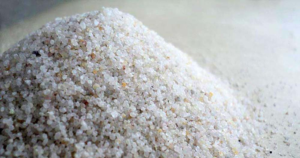
Silica Sand
Silica sand is commonly employed for gentler surface treatments in sandblasting. Compared to white corundum, it has relatively lower hardness and wear resistance, making it more appropriate for applications where surface requirements are less stringent. Due to its softer particle composition and reduced impact force, silica sand delivers less intense cutting and grinding effects, offering a milder approach to surface preparation.
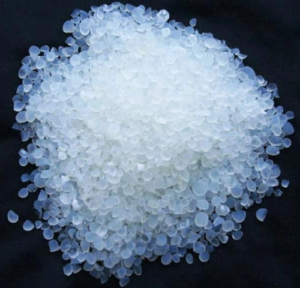
Silicon Dioxide (SiO₂)
Silicon dioxide (SiO₂) is another widely used abrasive material in sandblasting applications. Its hardness and wear resistance fall between that of white corundum and silica sand, offering a balanced effect. SiO₂ provides sufficient surface roughness to improve coating adhesion without inflicting the excessive damage associated with white corundum. While its grinding capability is strong, it is less aggressive than white corundum, making it suitable for more controlled surface treatments. However, for achieving optimal surface treatment results on titanium and titanium alloys, white corundum is typically preferred due to its superior hardness and cutting efficiency.
Sandblasting serves as an effective surface treatment for titanium and titanium alloys, playing a critical role in enhancing surface roughness, adhesion, and mechanical properties. Its application spans various industries, including medical, aerospace, and composite materials, providing improved performance and durability. The choice of abrasive-ranging from white corundum to silica sand and silicon dioxide-depends on the specific requirements of the material and desired surface characteristics. By understanding and optimizing the sandblasting process, titanium components can be ensured to perform optimally in high-demand applications.
Types of Sandblasting Processes
1.Dry Sandblasting Process
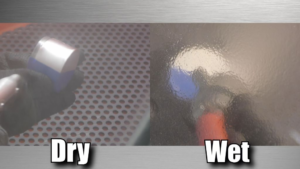
Dry sandblasting is one of the most prevalent and traditional methods for surface treatment. In this process, compressed air is utilized to propel abrasives such as silica sand, garnet, or iron sand at high velocity onto the surface of the workpiece. The abrasives impact the material, effectively removing contaminants, scale, rust, old coatings, and other unwanted substances, while simultaneously creating a roughened texture that is crucial for improving the adhesion of coatings, paints, or other finishes.
The effectiveness of dry sandblasting depends on several key factors, including the selection of abrasives and the air pressure applied. For example, larger steel components with thicknesses exceeding 3 mm typically require abrasives like silica sand, with a particle size ranging from 2.5 to 0.5 mm, combined with air pressure between 0.3 and 0.5 MPa. The proper combination of abrasives and pressure ensures that the surface is thoroughly cleaned and prepared without causing damage. Furthermore, dry sandblasting can be adjusted to achieve varying levels of roughness, depending on the specific requirements of the workpiece.
This method is commonly employed for cleaning metal surfaces, preparing substrates for coatings and paints, deburring metal parts, and texturing materials to improve adhesion. Dry sandblasting is widely utilized in industries such as automotive manufacturing, shipbuilding, steel production, and aerospace, where effective surface preparation of large components is essential for ensuring both performance and durability.
2. Wet Sandblasting Process
Wet sandblasting integrates the principles of traditional dry sandblasting with the addition of water to the abrasive material, forming a slurry mixture. The inclusion of water significantly reduces dust production during the blasting process, making it particularly advantageous in environments where cleanliness and environmental safety are a priority. The water helps to contain dust, preventing it from contaminating the air and surrounding environment, which is especially critical in industries that emphasize air quality and hygiene.
Additionally, wet sandblasting helps lower the surface temperature of the workpiece during treatment, as the water absorbs a portion of the heat generated by the friction between the abrasives and the surface. This cooling effect is vital for preventing thermal damage to sensitive materials or components, which may warp or degrade when exposed to excessive heat.
Wet sandblasting is widely used for surface cleaning, rust removal, and paint stripping in applications where controlling airborne dust is crucial. It is especially valuable in industries such as construction, automotive repair, and marine maintenance, where surface cleaning needs to be performed in confined or sensitive environments. The process also reduces wear on both the abrasive material and the blasting equipment, thus extending the lifespan of these components. Furthermore, wet sandblasting is frequently employed in industrial maintenance to prepare surfaces for subsequent coating applications, ensuring a clean and well-prepared surface for further treatments.
3. Shot Peening Process
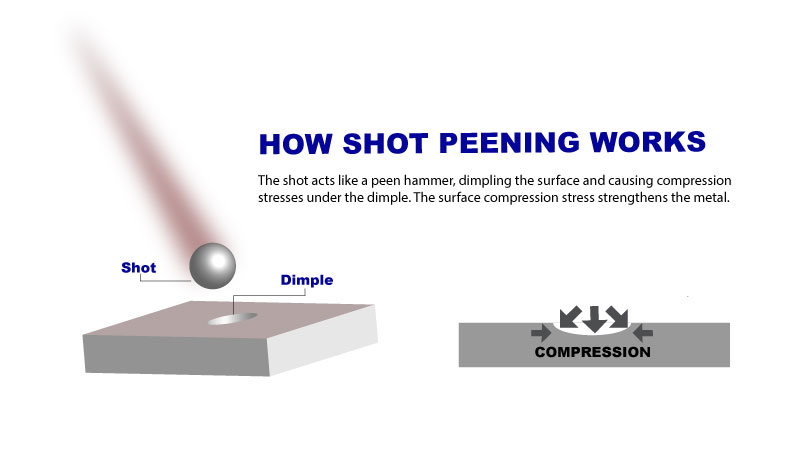
Shot peening is a surface treatment method that shares similarities with sandblasting but differs in that it uses spherical abrasives such as steel shot, glass beads, or ceramic beads rather than granular abrasives. These spherical abrasives are propelled at high velocity onto the surface of the workpiece, but unlike traditional sandblasting, shot peening does not involve the removal of material. Instead, it introduces compressive stress into the material's surface layers.
This compressive stress is highly advantageous for enhancing the fatigue strength and resistance to stress corrosion of metal components. By subjecting the workpiece to shot peening, microcracks and surface defects are closed, preventing crack initiation under cyclic loading or stress. This results in improved durability and an extended service life for critical components exposed to dynamic stresses.
Shot peening is extensively used in the aerospace, automotive, and defense industries for the treatment of high-performance parts such as gears, turbine blades, springs, and engine components that undergo repeated stress cycles. For example, shot peening is particularly beneficial for aircraft engine components, improving their resistance to fatigue and extending their lifespan under demanding conditions. Automotive parts like crankshafts and connecting rods also undergo shot peening to enhance their resistance to cracking and wear.
This method is essential for components that must endure cyclic loading and fatigue failure, making it an indispensable process in precision engineering. Shot peening not only increases the surface hardness of materials but also does so without altering their overall material properties, making it ideal for parts that need to maintain strength while resisting wear and corrosion.
4. Suction Sandblasting
Suction sandblasting, also known as siphon sandblasting, operates by using a siphon tube to draw abrasive materials into the airflow. This method is particularly effective for treating small, intricately shaped parts that may be difficult to handle with other sandblasting techniques. The abrasive material-such as sand, glass beads, or other grit-is drawn through the siphon and propelled toward the surface by compressed air. Due to its low-pressure operation, suction sandblasting is less aggressive than pressure sandblasting, reducing the risk of damaging delicate components.
This technique is commonly used for light to moderate surface cleaning, deburring, and texture creation on smaller metal parts, automotive components, and detailed castings. Due to its relatively low operating cost and simplicity, suction sandblasting is an ideal solution for small workshops or businesses that require precision work without the need for high volume or extreme pressure. However, it may not be suitable for larger surface areas or for more aggressive treatments, where higher pressure and more powerful methods may be necessary.

5. Pressure Sandblasting
Pressure sandblasting is a high-efficiency technique that utilizes a pressurized container to accelerate abrasive materials at high speeds, making it highly effective for large-area surface treatment. This method is particularly suited for industrial operations where productivity is essential. The high-pressure stream allows the abrasive material to impact the surface with increased force, efficiently removing rust, scale, paint, and other contaminants, while also roughening the surface to enhance the adhesion of coatings.
Commonly employed in heavy industries such as shipbuilding, steel fabrication, and construction, pressure sandblasting is used to clean and prepare large parts-such as tanks, pipelines, and machinery-for subsequent coating applications. The process can be adjusted by varying the pressure and type of abrasive to suit different materials and surface profiles. While pressure sandblasting offers high efficiency, it also requires more advanced and costly equipment, making it most suitable for high-volume production environments.
6. Wet Abrasive Blasting
Wet abrasive blasting combines water with abrasive materials to form a slurry that is used to clean or prepare surfaces. The addition of water significantly reduces dust production, making this method ideal for environments with stringent cleanliness standards, such as in the pharmaceutical, food processing, and electronics industries. The water not only suppresses airborne particulates but also helps to minimize wear on the equipment by preventing the abrasive from becoming excessively aggressive.
This process excels in removing coatings, rust, and dirt from delicate surfaces, all while preventing heat buildup and over-scratching. Wet abrasive blasting is commonly used for surface preparation prior to coating, anodizing, or other finishing processes. Furthermore, the water helps to cool the surface, which is advantageous for sensitive materials that may be susceptible to damage from excessive heat or friction. Environmentally, wet abrasive blasting offers a more sustainable alternative to dry sandblasting, as it significantly reduces dust emissions and waste. The water used in the process can often be filtered and reused in a closed-loop system, enhancing its eco-friendly credentials.
7. Bead Blasting
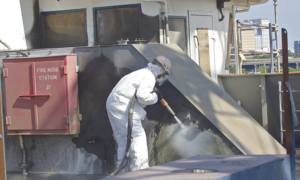
Bead blasting employs glass beads or other spherical abrasives to gently clean, smooth, and polish surfaces. This method is particularly effective for fine surface treatments, where the objective is to preserve the integrity and precision of the material while removing contaminants. The spherical shape of the glass beads ensures a uniform, even finish, eliminating the harsh effects typically associated with angular abrasives.
Bead blasting is widely utilized in industries that demand precision work, including jewelry making, aerospace, automotive, and medical devices. In aerospace, for example, bead blasting is used to treat titanium and aluminum parts to enhance their appearance and improve resistance to corrosion. It is also a preferred method for cleaning delicate components without altering their geometry or causing surface damage, making it ideal for precision instruments, turbine blades, and surgical implants.
This technique is versatile, capable of achieving both high-sheen polishing of metal parts and creating a matte finish, as required in products such as medical implants, where smoothness and biocompatibility are critical. The non-abrasive nature of glass beads allows for refined surface treatment, and the process can be adjusted to achieve various levels of smoothness, depending on the desired outcome.
8. Dry Ice Blasting
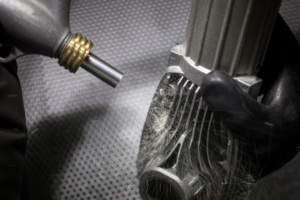
Dry ice blasting is a distinctive cleaning technique that utilizes dry ice pellets rather than conventional abrasives. Upon contact with the surface, the dry ice pellets sublimate instantly, transforming from solid to gas. This rapid phase transition creates a micro-explosion that effectively removes contaminants such as dirt, grease, paint, and mold, without leaving any residue behind. The sublimation process ensures that the surface remains clean and dry, eliminating the need for further cleanup.
This method is particularly well-suited for applications where a residue-free cleaning process is essential. It is frequently employed in industries such as food processing, electronics, and museum conservation, where even the smallest residue could result in contamination or damage. Dry ice blasting is also an environmentally friendly alternative, as the dry ice is non-toxic and poses no harm to health or the environment.
A key advantage of dry ice blasting is that it requires no solvents or water, thereby preventing the introduction of additional waste into the cleaning process. This makes it ideal for cleaning sensitive equipment, machinery, or surfaces where traditional methods would be too abrasive or leave harmful residues. Dry ice blasting is widely used in electronics manufacturing, printing presses, and the preservation of historical artifacts, ensuring the preservation of delicate components in their original state.
Main Applications of Sandblasting
Aerospace Industry
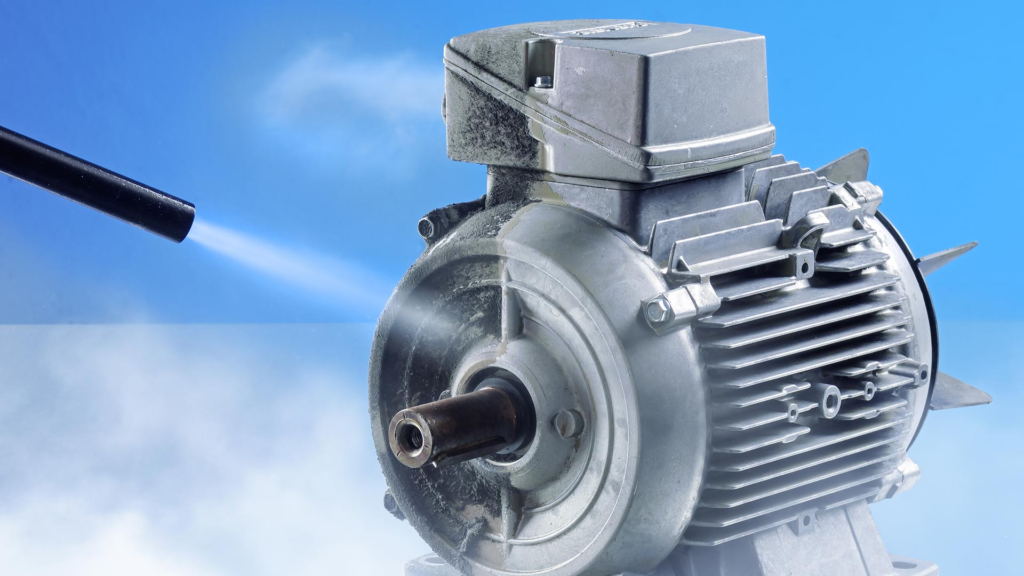
Sandblasting is a crucial process in the aerospace industry, where it is used to prepare metal surfaces for coatings and enhance their surface properties. Titanium alloy components, commonly found in aircraft, benefit from sandblasting to improve fatigue resistance, ensure better adhesion of protective coatings, and remove oxide layers. Additionally, sandblasting plays a vital role in surface cleaning for turbine blades, engines, and other high-stress components, ensuring their durability and long-term reliability in demanding operational environments.

Automotive Industry
In the automotive industry, sandblasting is frequently employed to clean and roughen metal components, including engine parts, body panels, and exhaust systems. This process improves the surface texture, ensuring better adhesion of coatings, paints, and primers. Sandblasting is also used to create a matte finish on alloy wheels and trim parts, enhancing their aesthetic appeal while maintaining durability.

Medical Implants
In the medical field, sandblasting is essential for treating implants such as hip replacements, dental implants, and orthopedic devices. It is used to clean the surfaces of these implants, enhance surface roughness, and promote osseointegration. The increased surface roughness facilitates stronger adhesion of bone tissue to the implant, contributing to the long-term success and stability of the implant within the human body.

Construction and Industrial Equipment
Sandblasting is crucial for cleaning and preparing the surfaces of large industrial machinery and structures. It is used to remove old coatings, rust, and contaminants from steel structures, bridges, pipelines, and tanks, ensuring the surfaces are properly prepared for repainting. This process not only enhances the appearance but also extends the lifespan of the equipment. For construction machinery made from titanium alloys, sandblasting helps prevent corrosion and maintains optimal performance, particularly in harsh environmental conditions.

Shipbuilding
In shipbuilding, sandblasting is employed to clean large surfaces, particularly for removing rust, old paint, and marine growth from hulls and other parts of the ship. By improving the surface quality, sandblasting enhances the adhesion of protective coatings, which are crucial for safeguarding the ship against corrosion and ensuring its longevity in challenging marine environments.

Art and Decorative Finishes
Sandblasting is widely utilized in the creation of decorative finishes on materials such as glass, stone, and metal. Artists and designers employ sandblasting to craft intricate patterns or textures on sculptures, trophies, and signage. In metals like titanium, sandblasting not only enhances the surface texture but also serves an aesthetic purpose, particularly in the design of custom jewelry and other fine titanium products, adding both visual appeal and uniqueness.

Sandblasting in Titanium and Titanium Anodes
Titanium is a highly versatile and corrosion-resistant metal, extensively used in aerospace, medical implants, automotive, and industrial applications. However, its smooth, non-reactive surface can present challenges for processes requiring strong adhesion, such as coating or anodizing. Sandblasting is an effective solution to these challenges, offering significant advantages in the processing and treatment of titanium materials.
1. Improving Surface Adhesion for Coatings
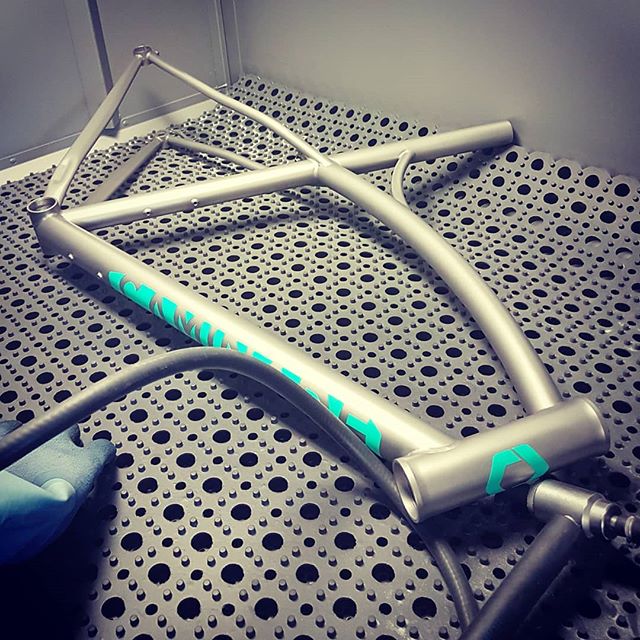
One of the primary applications of sandblasting on titanium is to enhance the surface's ability to bond with coatings. The naturally smooth and non-porous surface of titanium can hinder the adhesion of paints, primers, and other coatings. Sandblasting roughens the titanium surface by creating microscopic grooves and textures, which significantly improve the mechanical adhesion of coatings. This is particularly crucial in aerospace components, where coating adhesion is vital to preventing corrosion and wear.
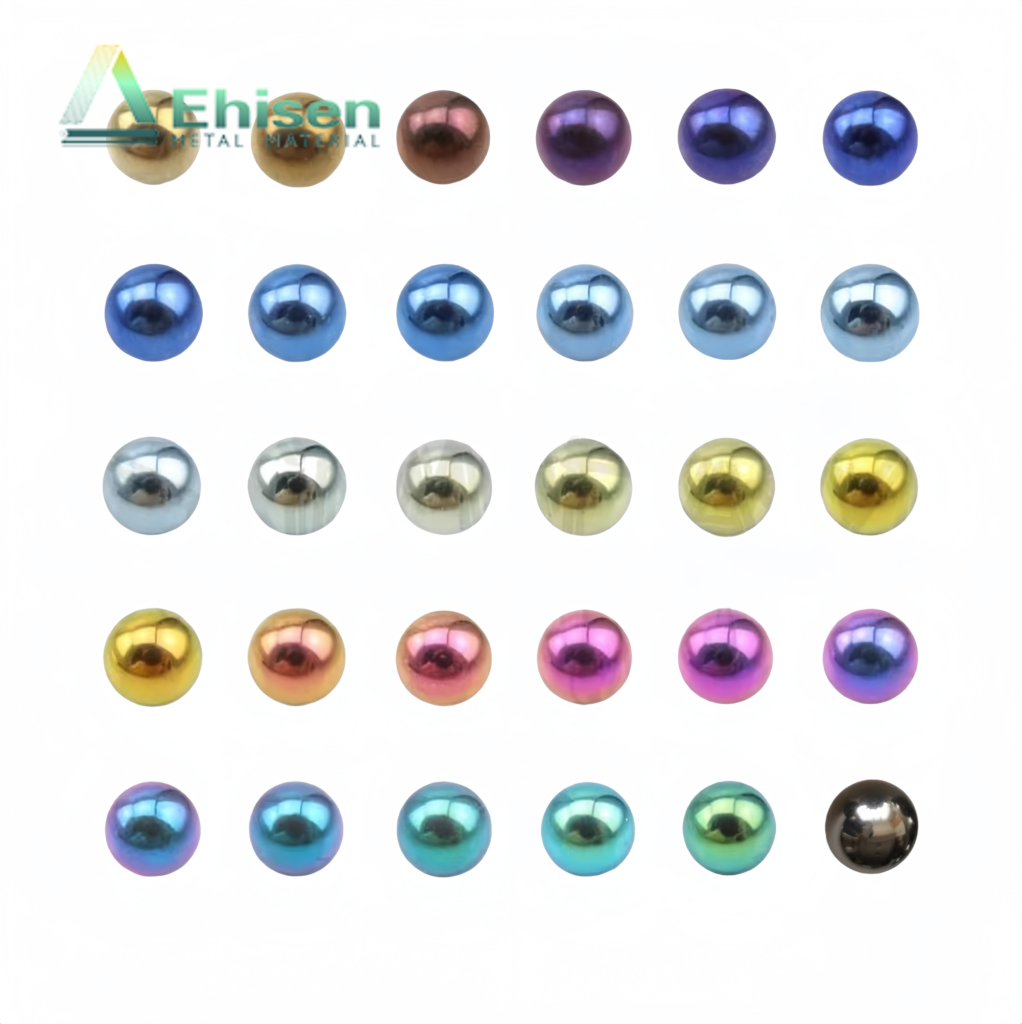
In titanium anodizing, sandblasting also plays a key role in improving the uniformity of the anodic oxide layer. Anodizing is an electrochemical process that forms a protective oxide layer on the titanium surface, enhancing its corrosion resistance. When sandblasting is applied prior to anodizing, the roughened surface facilitates better bonding of the oxide layer, resulting in a more durable, uniform, and aesthetically appealing finish.
2. Titanium Anodes and Surface Treatment
Titanium anodes, widely used in electrochemical processes, significantly benefit from sandblasting. This process increases the surface roughness of titanium anodes, providing a larger surface area that enhances the effectiveness of electrochemical reactions. The roughened surface not only improves the adhesion of the anodic oxide layer but also boosts the anode's performance in terms of electrical conductivity and corrosion resistance.
In industries such as electroplating, water treatment, and cathodic protection, titanium anodes require a uniform and consistent oxide layer to ensure stable, long-lasting performance. Sandblasting plays a crucial role in achieving this, promoting a more even oxide formation while also removing impurities or pre-existing oxidation from the titanium surface, ensuring a clean and efficient anode.
Moreover, the enhanced surface texture created by sandblasting improves the interaction between titanium anodes and electrolytes during electrochemical processes. This results in improved efficiency, better overall performance, and extended longevity of the anodes in demanding industrial applications.

3. Enhancing Fatigue Resistance and Strength
Sandblasting titanium can significantly improve its fatigue resistance and overall mechanical properties. The process induces compressive stress in the surface layers of the material, enhancing its ability to withstand cyclic loading and stress. This is particularly crucial in aerospace and medical implant applications, where components are subjected to repeated forces. The induced compressive stress helps prevent the initiation of cracks, which could otherwise lead to material failure over time.
This surface treatment is especially advantageous for components exposed to dynamic loads, such as turbine blades and orthopedic implants. By improving fatigue resistance, sandblasting increases the longevity and reliability of titanium parts in high-stress environments, ensuring they perform optimally throughout their service life.
4. Corrosion Resistance in Harsh Environments
Titanium's exceptional corrosion resistance is one of its key advantages, particularly in marine, aerospace, and chemical processing applications. Sandblasting further enhances this resistance by improving the surface properties that protect against wear and degradation. When combined with coatings and anodizing, sandblasting provides an additional layer of defense against environmental stresses such as seawater, high-temperature gases, and corrosive chemicals. This combined approach ensures that titanium components maintain their durability and reliability, even in the harshest conditions.
Conclusion
Sandblasting is a highly effective surface treatment that plays a pivotal role in enhancing and preparing titanium materials. Whether employed to improve coating adhesion, boost fatigue resistance, or assist in anodizing, sandblasting provides a versatile solution for a wide range of high-performance applications. In titanium and titanium anodes, it is particularly beneficial for ensuring superior coating adhesion, enhancing corrosion resistance, and improving mechanical properties.
The integration of sandblasting with anodizing and other surface treatments ensures that titanium components deliver optimal performance across demanding industries, including aerospace, medical implants, and industrial applications. Understanding and applying sandblasting technology effectively is key to ensuring the longevity, strength, and functionality of titanium-based products.
At Ehisen, we offer cutting-edge sandblasting technology tailored to meet the unique needs of your titanium processing requirements. Whether you seek to improve surface roughness, enhance adhesion, or ensure long-lasting performance, our advanced sandblasting services deliver top-quality results. Let us help elevate your titanium products with our expert surface treatment solutions.
Contact us today to discover how Ehisen's advanced sandblasting processes can benefit your business and optimize the performance of your titanium components!