

Introduction: Choosing the Right Electrode Requires More Than Platinum Thickness
Platinum titanium electrodes are widely used in advanced electrochemical applications because of their excellent corrosion resistance, stable electrical performance, and long operating lifetime. They are commonly applied in precious metal electroplating, wastewater treatment, seawater electrolysis, and various industrial electrochemical systems.
However, selecting a suitable platinum titanium electrode is not simply about choosing a product with a thicker platinum layer or a lower purchase price. The actual performance of an electrode depends on many factors, including electrolyte composition, current density, operating temperature, coating technology, electrode structure, and maintenance conditions.
A platinum titanium electrode that performs well in one application may not be suitable for another. For example, an electrode used for precision gold plating requires high surface stability and uniform current distribution, while an electrode used for seawater electrolysis requires strong chloride resistance and reliable long-term operation.
Therefore, before purchasing platinum titanium electrodes, customers should evaluate their actual working conditions and select a solution that matches their application requirements. This article explains the key factors that influence electrode selection and helps buyers avoid common mistakes during the purchasing process.
1. Select Platinum Titanium Electrodes According to Application Requirements
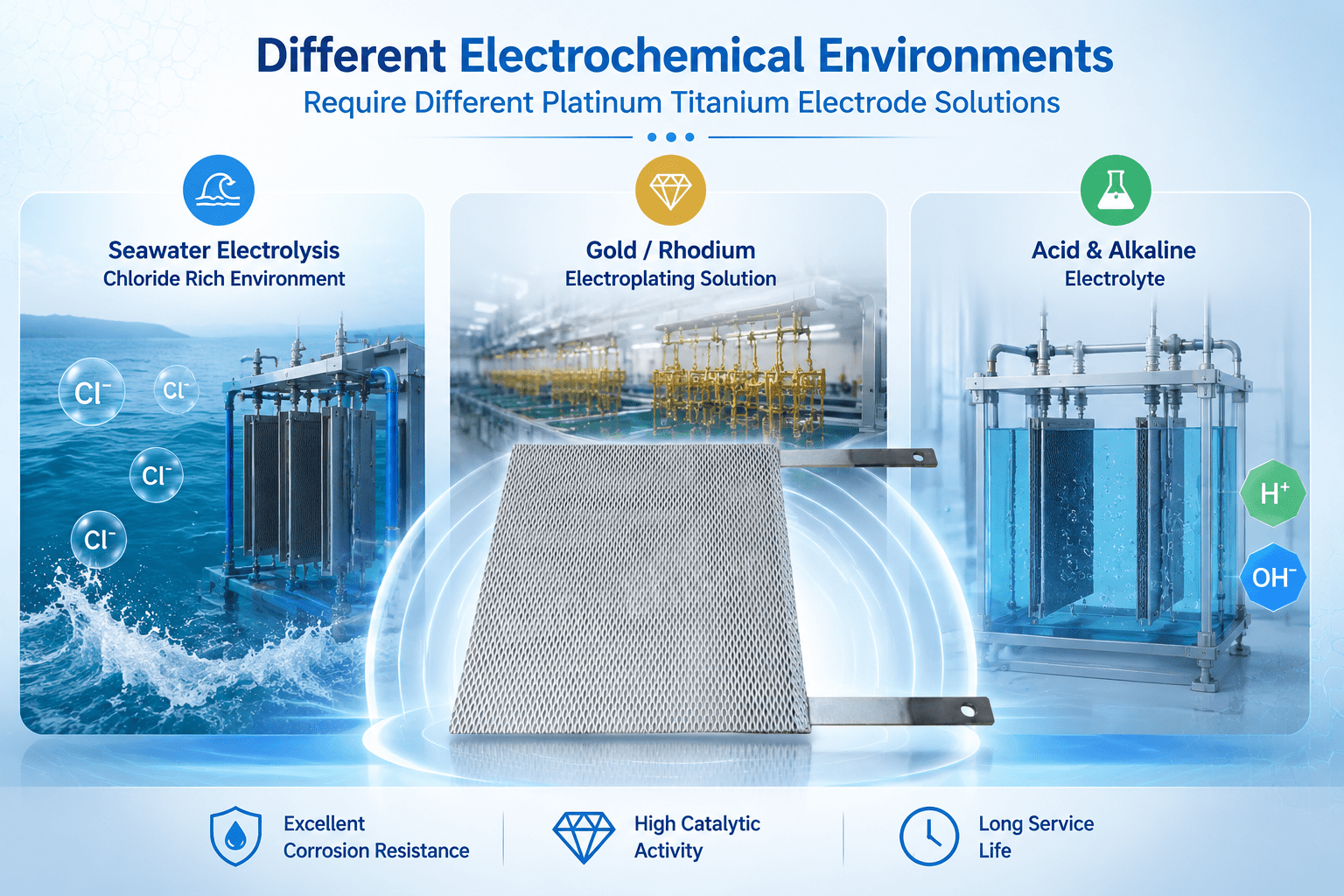
The working environment is the first factor that should be considered when selecting a platinum titanium electrode. Different electrolytes create different requirements for electrode materials, coating structures, and operating parameters.
Electrolyte Compatibility: Understand the Working Medium Before Selection
Platinum has excellent chemical stability and can operate in many demanding electrochemical environments. Combined with a titanium substrate, a platinum titanium electrode provides both corrosion resistance and mechanical strength.
In applications such as seawater electrolysis, precious metal electroplating, acidic solutions, and alkaline environments, platinum titanium electrodes can provide stable performance when the operating conditions are appropriate.
However, excellent corrosion resistance does not mean that platinum titanium electrodes are suitable for every chemical environment.
Certain ions may affect the titanium substrate and weaken the bonding between the coating and substrate. Fluoride ions are especially important because they can attack the protective oxide layer on titanium. Once the titanium surface protection is damaged, coating adhesion may decrease and coating peeling may occur.
Phosphate-containing environments should also be carefully evaluated because certain operating conditions may influence electrode stability.
For this reason, customers should always provide detailed electrolyte information before purchasing, including chemical composition, concentration, pH value, temperature, and possible impurities.
For precious metal electroplating applications, such as gold or rhodium plating, maintaining a clean plating solution is particularly important. Contaminants in the electrolyte may affect plating quality and reduce electrode lifetime.
A professional titanium electrode supplier should evaluate the chemical environment before recommending an electrode solution.
Current Density: Avoid Operating Beyond the Electrode Capability
Current density is another critical parameter affecting platinum titanium electrode performance.
Many customers focus only on total current, but the current density applied to the electrode surface directly influences coating consumption, reaction efficiency, and service life.
When operating within a suitable current density range, the electrode can maintain stable electrochemical performance. However, excessive current density may accelerate coating degradation, create uneven current distribution, increase local heating, and shorten electrode lifetime.
Higher current density does not always mean higher efficiency. In many cases, improving electrode design, increasing effective surface area, and optimizing current distribution can achieve better performance than simply increasing electrical loading.
Therefore, current density should always be evaluated together with electrode area, electrolyte conditions, temperature, and cooling conditions.
Operating Temperature: Consider Long-Term Thermal Stability
Temperature influences both electrochemical reactions and coating stability.
Higher temperatures can increase reaction activity but may also accelerate material consumption and increase stress between the platinum coating and titanium substrate.
For normal operating temperatures, standard platinum titanium electrode solutions may provide stable performance. However, applications involving high temperatures or frequent temperature changes require additional evaluation of coating adhesion, substrate design, and manufacturing process.
Before selecting electrodes for high-temperature applications, customers should provide information about operating temperature, maximum temperature, heating cycles, and continuous working time.
2. Platinum Layer Thickness and Manufacturing Process Selection
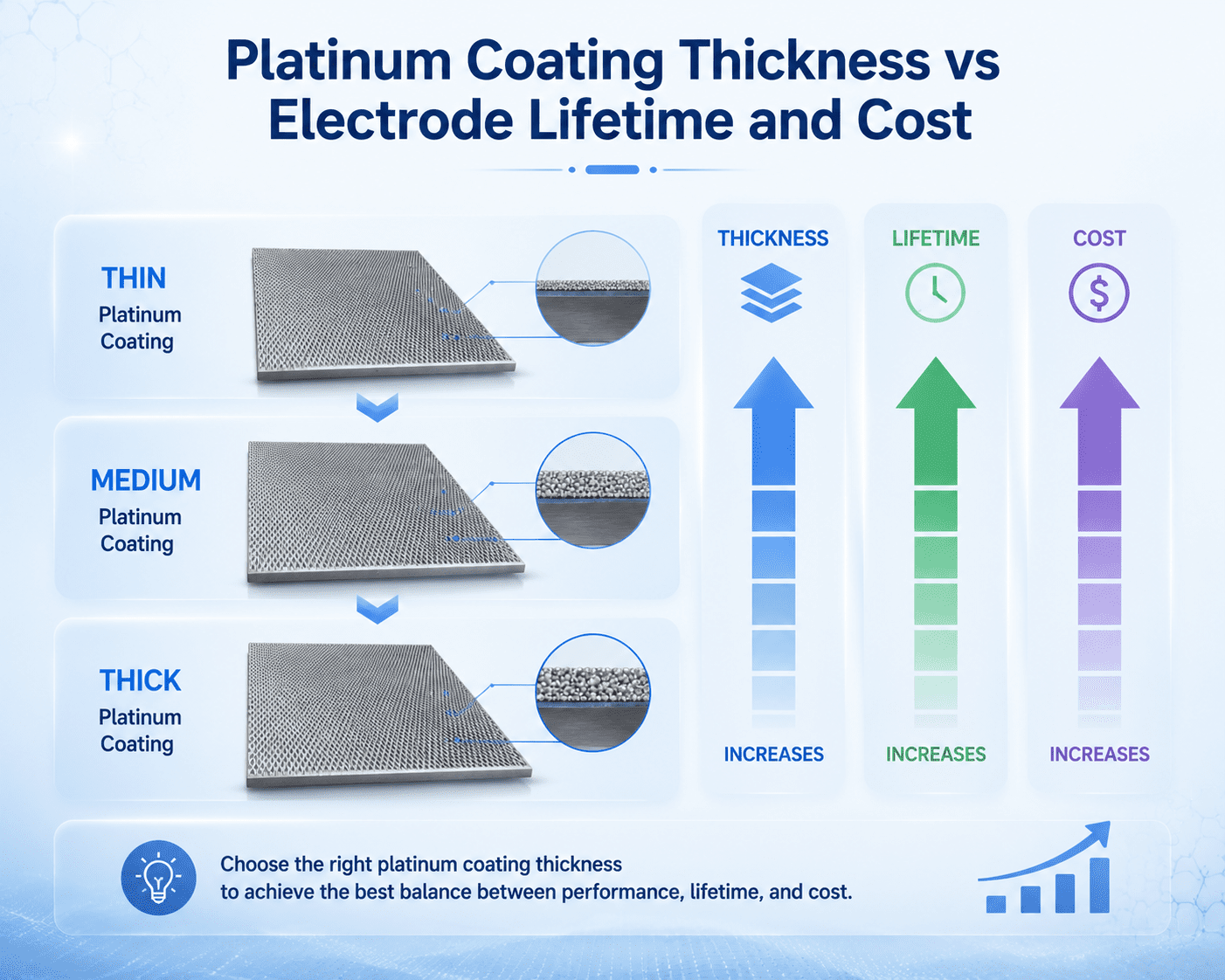
The platinum layer is one of the most important factors influencing electrode lifetime and cost. However, thicker platinum does not always mean a better solution.
A thicker platinum layer generally provides better protection and longer service life under demanding conditions. However, because platinum is a precious metal, increasing platinum loading also increases manufacturing cost.
The correct selection should balance performance requirements and economic considerations.
For applications where electrode replacement is difficult, production interruption causes significant losses, or equipment operates continuously for long periods, investing in a more durable platinum layer may provide better overall value.
For applications with lower operating frequency or less demanding conditions, selecting an appropriate platinum thickness can achieve the required performance without unnecessary cost.
The most suitable platinum thickness depends on:
● Working environment
● Current density
● Required lifetime
● Operating hours
● Replacement cost
A professional supplier should recommend coating thickness according to actual operating conditions rather than simply offering the thickest option.
Platinum Electroplating and Platinum Coating Processes
Different platinum manufacturing processes create different electrode characteristics.
Platinum electroplating produces a metallic platinum layer deposited directly onto the titanium substrate. This process provides a relatively dense platinum surface with good electrical conductivity and stable current distribution.
Because of its high surface purity and uniform performance, platinum electroplated titanium electrodes are often selected for applications requiring precise electrochemical control, such as precious metal electroplating and electronic component manufacturing.
Another method is platinum coating through thermal treatment. This process forms a platinum-containing functional coating through coating application and high-temperature treatment.
Compared with metallic platinum electroplating, thermal coating technology can provide a more cost-effective solution for many industrial applications, especially where large electrode areas or customized structures are required.
The choice between these processes should depend on application requirements rather than price alone.
Precision plating applications may prioritize surface purity and current stability, while industrial systems may focus more on cost efficiency, durability, and large-area electrode design.
3. Electrode Structure and Installation Considerations
Even with the correct platinum material and coating process, electrode structure and installation methods strongly influence actual performance.
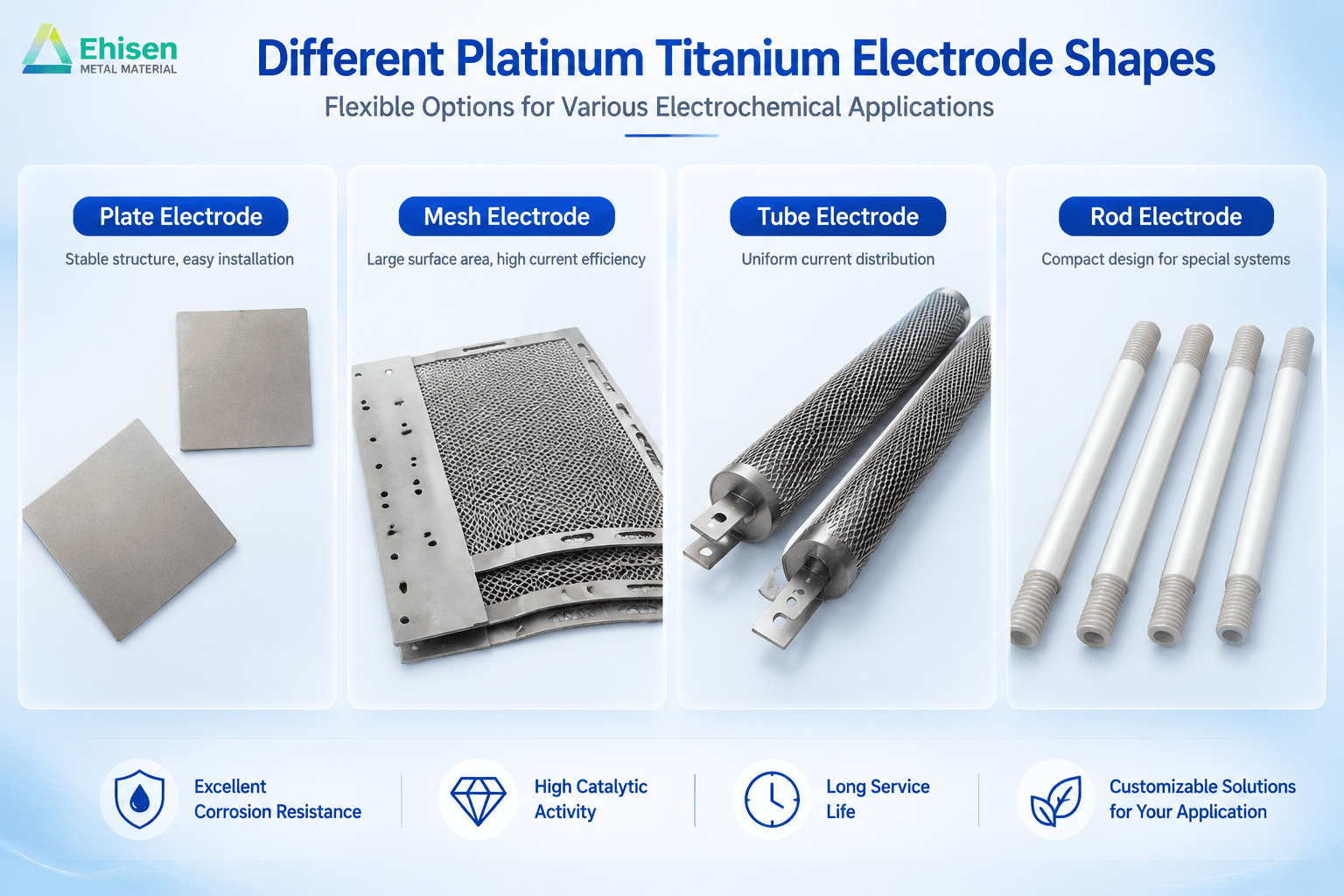
Platinum titanium electrodes are available in different structures, including plate, mesh, tube, and rod designs. Each structure has its own advantages.
Plate electrodes provide a stable structure and are suitable for applications requiring mechanical strength and simple installation.
Mesh electrodes offer a larger effective surface area and better electrolyte circulation, making them widely used in electrochemical systems, wastewater treatment, and electrolysis applications.
Tube and rod electrodes are often selected for compact systems or special reactor designs where installation space is limited.
The correct electrode shape should match the reactor structure, electrolyte flow conditions, and required reaction efficiency.
Anode and Cathode Area Ratio
The relationship between anode and cathode area is another important design factor.
If the cathode area is too large while the anode area is insufficient, the anode may experience excessive current loading. This can increase local current density and accelerate coating degradation.
A properly designed electrochemical system should maintain suitable electrode area ratios, stable current distribution, and efficient electrolyte circulation.
When requesting electrode recommendations, customers should provide electrode dimensions, installation drawings, operating current, and electrode spacing.
Installation and Maintenance
Platinum titanium electrodes are precision components, and improper handling can damage the coating.
During installation, avoid bending, impact, scratching, or contact with hard objects. Mechanical damage may create defects in the coating and reduce long-term reliability.
After operation, proper cleaning and storage are also important. When equipment is shut down for long periods, removing residual chemicals and avoiding mineral deposits can help maintain electrode performance.
Using clean water conditions and preventing scale formation are recommended practices because deposits on the electrode surface may reduce effective reaction area and affect current distribution.
Proper operation and maintenance can significantly extend electrode service life.
4. Platinum Titanium Electrode Selection for Different Applications
Precious Metal Electroplating
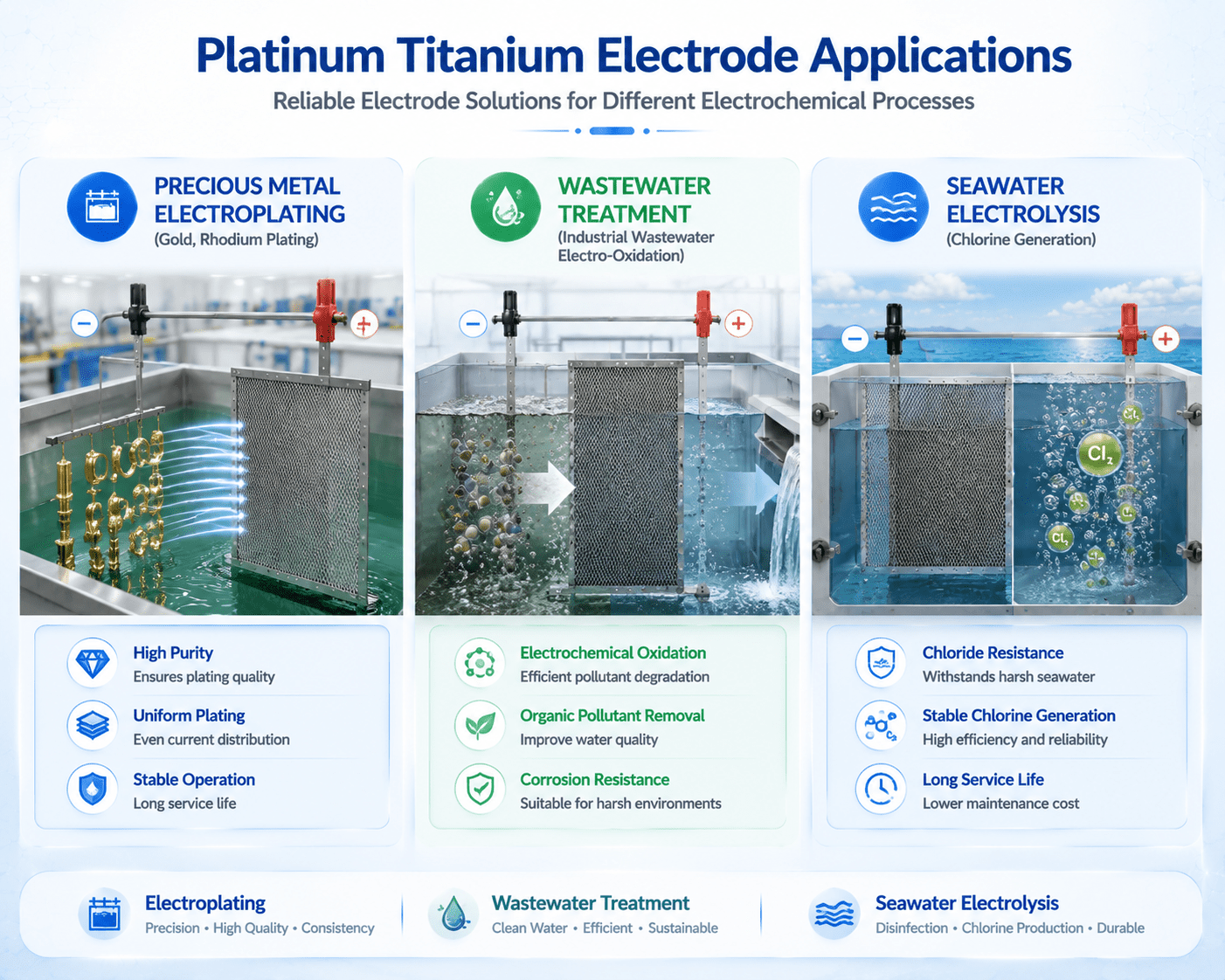
For gold, rhodium, and other precious metal plating applications, electrode stability and surface purity are especially important.
The electrode should provide uniform current distribution and avoid contaminating the plating solution. High-quality platinum titanium electrodes help maintain consistent plating thickness, surface appearance, and process stability.
Wastewater Treatment
In electrochemical wastewater treatment, platinum titanium electrodes are used for advanced oxidation processes to help degrade organic pollutants.
Applications such as printing wastewater, pharmaceutical wastewater, and chemical wastewater often require electrodes with strong corrosion resistance and stable catalytic performance.
The electrode design should consider wastewater composition, conductivity, temperature, and treatment requirements.
Seawater Electrolysis
Seawater electrolysis requires electrodes that can withstand chloride-rich environments.
Platinum titanium mesh electrodes are often considered for these systems because their open structure improves electrolyte contact and supports efficient electrochemical reactions.
The final electrode design depends on seawater conditions, current requirements, and system structure.
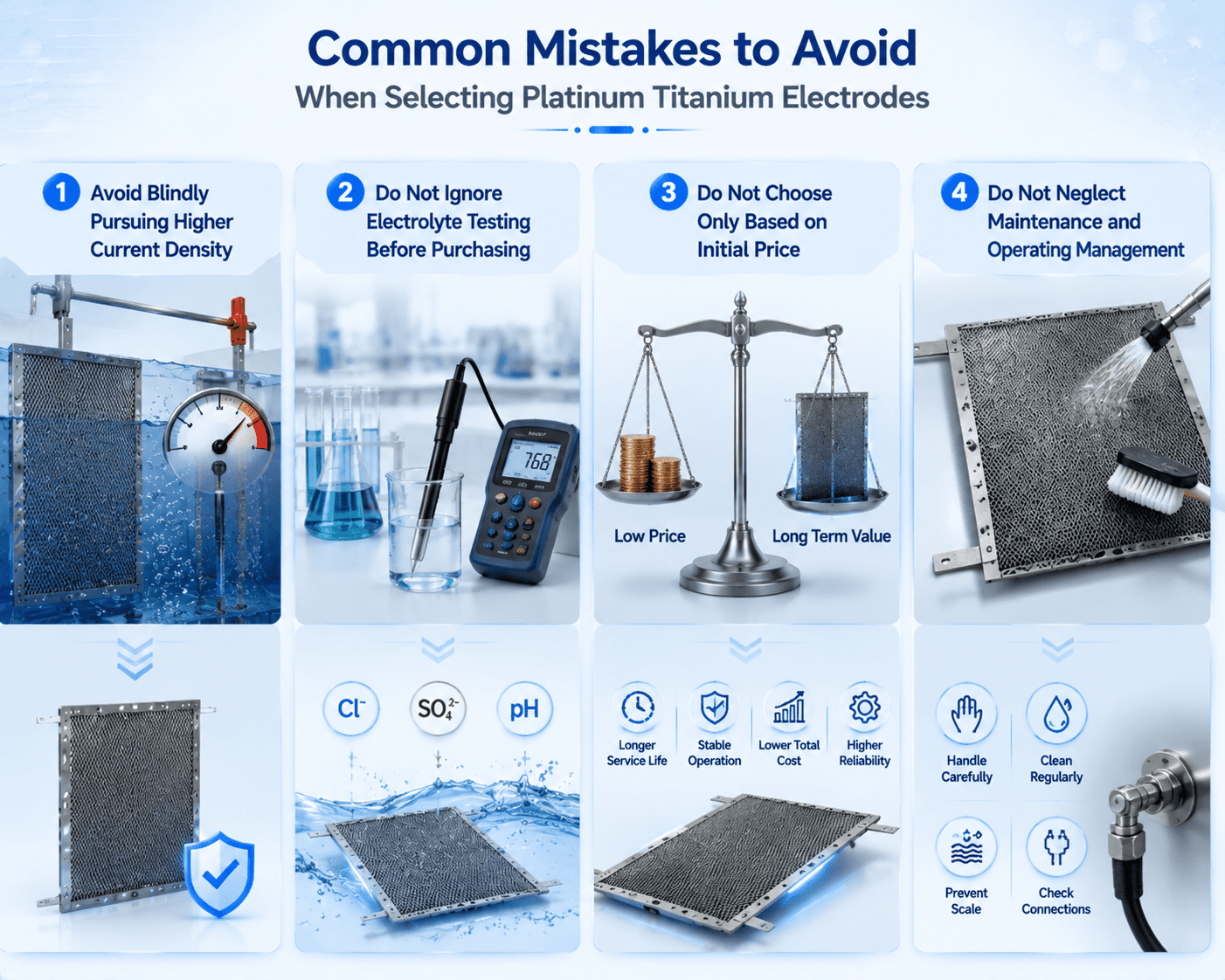
5. Common Mistakes When Selecting Platinum Titanium Electrodes
Many electrode problems are not caused by poor product quality but by incorrect selection.
One common mistake is blindly pursuing higher current density. Operating beyond the suitable range may accelerate coating consumption and reduce electrode lifetime. The goal should be achieving the required production efficiency while maintaining stable long-term operation.
Another mistake is ignoring electrolyte evaluation. Providing only electrode dimensions is usually not enough for accurate selection. Without understanding chemical composition, temperature, and operating conditions, even a high-quality electrode may fail to achieve expected lifetime.
Price-only purchasing decisions can also create problems. A lower initial price may result in shorter service life, more frequent replacement, and higher operating costs. For industrial applications, total lifetime cost is often more important than initial purchase price.
Finally, maintenance should not be ignored. Proper handling, cleaning, storage, and operating control are essential for protecting the platinum coating and extending electrode lifetime.
What Information Should You Provide When Purchasing Platinum Titanium Electrodes?
To receive an accurate recommendation and quotation, customers should provide:
● Application type
● Electrolyte composition
● Operating temperature
● Current and current density
● Electrode dimensions
● Required lifetime
● Installation requirements
● Technical drawings if available
With complete technical information, a professional titanium electrode manufacturer can recommend the most suitable coating technology, platinum loading, and electrode structure.
Conclusion
Selecting the right platinum titanium electrode requires a comprehensive understanding of application conditions rather than simply comparing coating thickness or price.
The ideal electrode solution should match the working environment, electrical requirements, temperature conditions, electrode structure, and maintenance plan.
Whether the application is precious metal electroplating, wastewater treatment, seawater electrolysis, or another electrochemical process, choosing the correct platinum titanium electrode can improve system stability, reduce maintenance costs, and extend operating lifetime.
A professional supplier should provide not only electrodes but also technical support and customized solutions based on real application requirements.
If you are looking for a customized platinum titanium electrode solution, providing your application details and operating conditions will help engineers recommend the most suitable electrode design for your project.