

In the realms of high-end industry and cutting-edge technology, the performance boundaries of foundational materials often determine the efficiency of systems and the pace of technological progress. A breakthrough in a single key material can reshape the technological pathways of an entire industry. Today, we formally introduce a strategic material that plays a central role in electrochemical engineering, green chemical engineering, and the hydrogen energy sector – Plated Platinum Titanium Felt.
Ehisen, leveraging profound expertise in specialty metals and continuous advancement in surface engineering technologies, is dedicated to translating the outstanding performance of this material into a core competitive advantage within our clients' value chains.

I. Material Deconstruction: The Composition and Value Proposition of Plated Platinum Titanium Felt
To grasp the value of Plated Platinum Titanium Felt, one must understand its sophisticated material design and functional integration. It is not merely a composite material but a multifunctional, integrated solution born from rigorous engineering.
1.Structural Matrix: Three-Dimensional Porous Titanium Felt
Material Selection Logic: Titanium, renowned for its exceptional strength-to-weight ratio and unparalleled corrosion resistance, is the unequivocal choice for harsh electrochemical environments. Its superior tolerance to corrosive media like chloride ions ensures the fundamental structural integrity of equipment over extended operation.
Configuration Advantage: The "felt" structure is a three-dimensional, interconnected network formed from micron-grade titanium fibers through high-temperature sintering. This configuration provides two core engineering advantages:
Ultra-High Specific Surface Area: It transforms the geometric area at the macro scale into an immense effective reaction interface via its microscopic fiber network.
Low-Flow-Resistance Mass Transfer Channels: The interpenetrating pore structure provides efficient mass transfer pathways for reaction media (gas, liquid), significantly reducing concentration polarization effects.
2.Functional Surface: Nanostructured Platinum Coating
Catalytic Core: Platinum, a benchmark element in the field of electrocatalysis, exhibits extremely high intrinsic activity and stability for reactions such as hydrogen evolution, oxygen evolution, and various organic electrosynthesis reactions.
Technical Core – Precision Plating: Advanced electrodeposition technology is used to construct a uniform, dense, and firmly bonded platinum catalytic layer on this complex three-dimensional titanium felt substrate. This process achieves the efficient integration of functional material (platinum) and structural material (titanium) at the molecular/atomic scale.
In summary, the essence of Plated Platinum Titanium Felt is to provide an electrochemical reaction platform that combines a conductive skeleton, efficient mass transfer, a maximized active interface, and exceptional stability.
II. Application Spectrum: A Key Enabler from Laboratory to Industrial Site
The value of Plated Platinum Titanium Felt lies in its ability to translate breakthroughs in fundamental materials science into powerful solutions for specific industrial challenges. Its applications extend far beyond a single field, empowering numerous strategic industries related to national economies and cutting-edge technology. Below, we will conduct an in-depth analysis of its core application scenarios, revealing its irreplaceable technical value.

1. Hydrogen Economy: A Core Electrode Material for Water Electrolysis
In the global vision of building a green and sustainable "hydrogen society," the efficient and low-cost production of "green hydrogen" is a crucial first step. Water electrolysis technology is the core pathway to achieve this goal, and Plated Platinum Titanium Felt plays an indispensable role.
Technical Challenge: The electrolysis of water is an extremely energy-intensive process. One major bottleneck for its efficiency lies in the "overpotential" at the electrode surface – meaning the voltage required to drive the actual reaction is significantly higher than the theoretical value. This extra voltage directly translates into electrical energy loss.
Solution: Plated Platinum Titanium Felt is used as the hydrogen evolution cathode or oxygen evolution anode in electrolyzers (particularly in Proton Exchange Membrane (PEM) electrolyzers and some advanced alkaline electrolyzers).
Ultimate Catalysis, Reduced Energy Consumption: The unparalleled high catalytic activity of the platinum layer significantly reduces the overpotential for the hydrogen evolution and oxygen evolution reactions. This means that at the same hydrogen production rate, electrolyzers using our electrodes can operate at lower cell voltages, directly saving enterprises substantial electricity costs.
3D Structure, Enhanced Efficiency: Its three-dimensional porous structure provides a vast three-phase interface (solid-liquid-gas), enabling efficient transport and separation of water molecules, electrons, and generated gas bubbles (hydrogen or oxygen). This greatly increases the reaction flux per unit area, allowing the electrolyzer to operate stably at higher current densities, thereby enabling equipment miniaturization and intensification.
Stability and Durability, Ensuring Operation: Under the practical operating conditions of frequent start-stop cycles and power fluctuations in electrolyzers, the strong coating adhesion of the Plated Platinum Titanium Felt and the excellent corrosion resistance of the titanium substrate ensure that the electrode does not fail due to bubble scrubbing or potential cycling. This provides material-level guarantee for the long-term (thousands to tens of thousands of hours) stable operation of the electrolyzer.
Ehisen's Contribution: Through our precisely controlled coating, we ensure the highly efficient utilization of the platinum catalyst, avoiding activity decay caused by uneven coating or detachment. We provide customers with electrode solutions that combine high efficiency, long service life, and low operating costs.

2. Environmental Remediation: A Highly Effective Tool for Electrochemical Advanced Oxidation
Facing increasingly complex and hard-to-degrade industrial wastewater (e.g., from printing/dyeing, pharmaceuticals, pesticides) and exhaust gases, traditional biological methods are often ineffective. Electrochemical Advanced Oxidation processes have become an ultimate treatment method due to their potent, clean, and secondary-pollution-free characteristics, with Plated Platinum Titanium Felt electrodes being a core component.
Technical Principle: This technology works by applying a specific voltage to the electrode surface to directly or indirectly generate powerful oxidants like hydroxyl radicals. These oxidants have an extremely strong oxidation capacity and can non-selectively "break down" organic pollutants completely, degrading them into carbon dioxide, water, and inorganic salts, achieving thorough mineralization.
Performance Advantages:
High Current Efficiency, Reduced Energy Consumption: The Plated Platinum Titanium Felt electrode efficiently catalyzes the generation and conversion of intermediate products like hydrogen peroxide, thereby producing more radicals. This means less electrical energy is required to treat a unit amount of pollutant, lowering operating costs.
Fouling Resistance and Long Service Life: When treating industrial wastewater with complex compositions containing high concentrations of chloride ions or organic matter, conventional electrodes are easily poisoned or corroded. The corrosion resistance of the titanium substrate and the chemical inertness of the platinum coating allow our electrodes to withstand such harsh environments, maintaining stable activity and offering a service life far exceeding that of electrodes made from materials like graphite or boron-doped diamond.
Modularity and Flexibility: Reactors based on Plated Platinum Titanium Felt electrodes are easily designed in a modular fashion, allowing for flexible configuration based on water volume and pollutant concentration. They are suitable for various scenarios, from source pre-treatment to end-of-pipe advanced polishing.
Ehisen's Contribution: We provide customers not just with electrodes, but with a highly reliable solution. The long-term stability of the electrode means the treatment system can operate continuously and stably, reducing the frequency of downtime for replacements, delivering predictable treatment results and lower comprehensive costs for our customers.
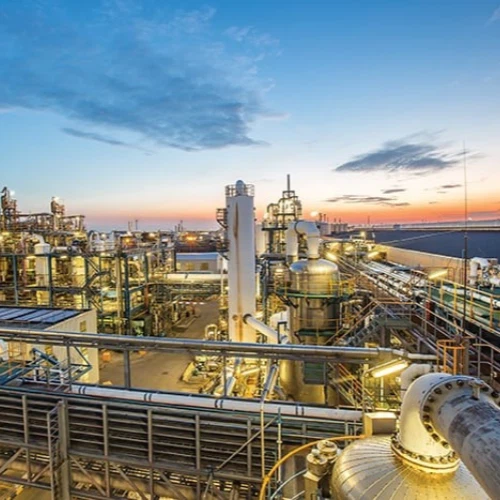
3. Advanced Chemical Industry and Metallurgy: A Precision Platform for Electrosynthesis and Recycling
In the fields of fine chemicals, pharmaceuticals, and hydrometallurgy, electrochemical synthesis and recycling are demonstrating significant potential, offering a greener synthesis path with higher atom economy and safer processes.
Organic Electrosynthesis:
Application Scenarios: Used for synthesizing high-value-added pharmaceutical intermediates, fragrances, pesticides, etc. Many reactions that traditionally require high temperatures and pressures, expensive oxidants or reductants, and involve cumbersome steps can be completed in a single step under ambient temperature and pressure using electrochemical methods.
Electrode Role: Here, the Plated Platinum Titanium Felt acts as the working electrode. Its high catalytic activity and selectivity can precisely guide the reaction along the predetermined pathway, suppressing side reactions, thus yielding high-purity target products, simplifying subsequent separation and purification processes, and improving product yield and quality.
Precious Metal Recovery and Refining:
Application Scenarios: Recovering precious metals like gold, silver, platinum, and palladium from "urban mines" such as electronic waste, spent catalysts, and electroplating waste liquids.
Electrode Role: Serving as the cathode, the Plated Platinum Titanium Felt, with its enormous specific surface area, acts like a highly efficient "nano-catcher." It can selectively capture precious metal ions diluted to ppm or even ppb levels in the solution via electrodeposition, reduce them to metal elements, and concentrate them within the felt matrix. This method offers high recovery rates, high product purity, and avoids the large amount of sludge generated by traditional chemical precipitation methods.
Ehisen's Contribution: We can optimize the microstructure and thickness of the platinum coating according to the customer's specific reaction system to achieve optimal reaction selectivity and current efficiency, assisting customers in achieving green upgrades to their processes and resource cycling.

III. Technical Insight: The Decisive Role of Plating Process Quality
The quality of the platinum coating is the primary determinant of the product's final performance and service life. The coating's microstructure dictates its macroscopic behavior. The electroplating process, particularly the control of core parameters like current density, is crucial for shaping the ideal microstructure. Below, we analyze the importance of process control through coating characterization under three typical scenarios.

Microstructure/Morphology: The image reveals the surface of the original titanium fibers, showing their inherent rolling texture and micro-roughness. The surface is clean, devoid of any platinum coating, providing the foundation for subsequent deposition.
Engineering Interpretation: This state defines the starting point of processing. A high-quality titanium felt substrate is a prerequisite for achieving a high-performance product. Its surface condition will directly influence the initial nucleation and bonding strength of the coating.
Scenario B: The Ideal Coating Under Optimized Process (Ehisen Technical Standard)

Microstructure/Morphology: The coating exhibits highly uniform and continuous coverage. The fiber contours are smooth and饱满, with the surface comprised of nano-scale grains. The structure is dense, free from visible defects, and the coating-substrate interface shows excellent integration.
Engineering Interpretation: This morphology is the result of precise control. Within the optimized current density window, platinum ions can uniformly nucleate at the substrate's active sites and grow epitaxially. This structure signifies:
Maximized Active Surface Area: All geometric surfaces are effectively utilized.
Exceptional Bonding Strength: The interface is robust, offering strong resistance to fluid shear stress and thermal shock.
Optimal Stability and Service Life: The dense structure effectively retards the corrosion and loss of the catalyst.

Microstructure/Morphology: The coating displays non-uniform, nodular, or dendritic growth. There is localized excessive accumulation, resulting in a loose, porous structure with obvious coverage blind spots and stress cracks.
Engineering Interpretation: This morphology typically originates from excessively high current density. It causes an overly rapid reduction of ions, leading to disordered stacking under diffusion control. This structure harbors serious risks:
Low Effective Active Area: The dendritic structure tends to clog pores, limiting the area actually participating in reactions.
Poor Mechanical Stability: The loose structure has weak bonding to the substrate, making it highly prone to pulverization and detachment under dynamic operating conditions.
Rapid Performance Decay: The high-surface-area dendrites are more susceptible to dissolution, and detachment leads to permanent loss of the active component.
The conclusion is evident: superior products stem from precise control over the process window and a deep understanding of microstructure. Ehisen ensures that every product meets the exceptional standard demonstrated in Scenario B through proprietary electrolyte formulations and intelligent process control systems, thereby achieving the perfect unification of performance and reliability.

IV. Value Proposition: The Rationale for Choosing Ehisen
1.Performance Certainty: We deliver not just products, but verified performance data and a commitment to long-term operational stability.
2.Deep Customization Capability: We offer flexible customization from porosity and platinum loading to product geometry, ensuring the solution precisely matches your process needs.
3.Full-Process Quality Assurance: An integrated quality control system spans from raw material inspection to final product characterization.
4.Professional Technical Collaboration: Our technical team acts as an extension of your R&D and production efforts, providing expert insights based on materials science.
Conclusion
In the wave of industrial upgrading and technological iteration, materials innovation is the eternal driver. Plated Platinum Titanium Felt, serving as an efficient bridge connecting electrical and chemical energy, is increasingly vital.
Ehisen, rooted in science and driven by process excellence, is committed to fully unlocking the potential of Plated Platinum Titanium Felt. We look forward to becoming your trusted strategic partner with our superior products and professional service, jointly advancing technological progress and empowering a green future.
Welcome to inquire and request detailed technical documentation and evaluation samples. Let us join hands, leveraging the power of materials, to catalyze a new chapter for industry.