

Introduction: Navigating the World of Titanium
Imagine you are holding a camping cup. It feels remarkably light in your hand, almost deceptively so for a metal object. Or perhaps you are considering a new piece of jewelry, promised to be hypoallergenic and everlasting. The material in question is titanium, a name that evokes a sense of strength, modernity, and high performance. Yet, a nagging question arises: "Is this product truly made of pure titanium, or am I holding a clever imitation?" This is a common and valid concern for consumers, engineers, and procurement specialists alike. The premium properties of titanium naturally command a higher value, making it a target for counterfeiters who may use lower-grade metals like aluminum or stainless steel, sometimes with a deceptive coating.
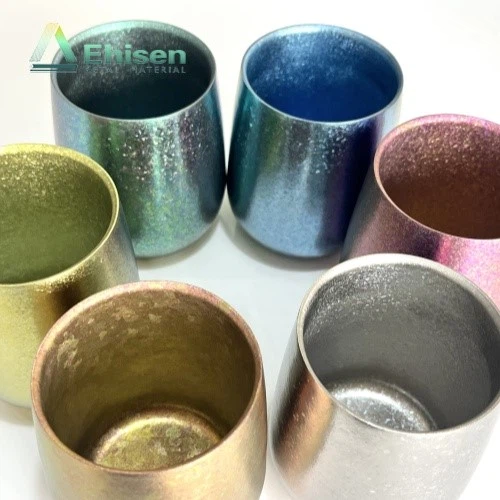
Titanium's reputation is well-deserved. It boasts an exceptional strength-to-weight ratio, being as strong as many grades of steel but nearly 50% lighter. It is completely biocompatible, making it the metal of choice for medical implants because it never reacts with the human body. Furthermore, it possesses an incredible resistance to corrosion, forming a passive oxide layer that protects it from rust and degradation, even in the harshest environments, from saltwater to acidic solutions. These outstanding characteristics are precisely why ensuring the authenticity of your titanium product is paramount. You are investing in performance, durability, and safety; you deserve the real thing.
This guide is crafted to empower you. At Ehisen, we believe that an informed customer is our best partner. Not only do we specialize in providing high-grade titanium products, but we are also dedicated to being a leading resource for knowledge about this remarkable metal. This comprehensive article will provide you with the foundational understanding of titanium's unique properties and then detail five practical, step-by-step methods you can use to verify the authenticity of titanium, moving from simple at-home tests to more advanced technical analyses. Our goal is to build trust through transparency and expertise, ensuring that when you choose Ehisen, you are choosing guaranteed quality.
Part 1: Fundamental Properties of Titanium: The Science Behind Authentication
Before diving into the practical tests, it is crucial to understand why these methods work. The techniques for identifying genuine titanium are directly derived from its intrinsic physical and chemical properties. By grasping this basic science, you will not just be following steps, but you will be understanding the principles behind them, making you a more discerning evaluator.

The most immediately noticeable characteristic of titanium is its low density. With a density of approximately 4.51 g/cm³, titanium sits in a unique position between aluminum (2.70 g/cm³) and steel (around 7.85 g/cm³). This means that for two objects of identical volume, a titanium one will weigh significantly less than a steel one-about 60% of the weight-while being comparable in strength. This high strength-to-weight ratio is the reason titanium is the cornerstone of aerospace engineering, where every gram saved translates to immense fuel efficiency. When you pick up a titanium product, your first cue should be its weight; it should feel surprisingly light for its size, a paradox of substantial feel without the heaviness.
The phrase "strength-to-weight ratio" is key. While pure aluminum is also very light, it is relatively soft and can be easily dented or bent. Titanium, particularly its alloys like Ti-6Al-4V (Grade 5), can achieve tensile strengths comparable to high-strength steels. This combination of lightness and robustness is what makes titanium ideal for applications demanding reliability under stress, such as bicycle frames, golf club heads, and surgical instruments. This inherent strength differentiates it from lighter, softer metals like aluminum when subjected to mechanical stress.
One of the most definitive and easily testable properties of commercially pure titanium (Grades 1, 2, 3, and 4) is that it is completely non-magnetic. This is because titanium has a paramagnetic nature, meaning it is very weakly attracted to magnets, but this attraction is so negligible that it is undetectable in practical, everyday tests. This provides a quick and powerful way to distinguish it from the most common magnetic impostor: certain types of stainless steel (particularly the ferritic and martensitic grades). It is important to note that some titanium alloys can exhibit very slight magnetic permeability under specialized conditions, but for all common consumer goods, titanium will show no attraction to a magnet.
Titanium is inherently a reactive metal, but its greatness lies in its ability to instantly form a stable, continuous, and adherent oxide layer (primarily TiO2) when exposed to oxygen. This layer is incredibly inert and protects the underlying metal from further attack. This makes titanium resistant to corrosion from a vast range of agents, including chlorides (like seawater), nitric acid, and organic chemicals. While this property is harder to test instantly without long-term exposure, it is a cornerstone of titanium's value proposition. A genuine titanium product will not rust or corrode under normal conditions, whereas a plated or coated imitation may eventually show signs of degradation if the coating is compromised.
Understanding these core properties provides the scientific foundation for the authentication methods that follow. Each test we will describe probes one or more of these fundamental characteristics.
Part 2: Five Practical Methods to Authenticate Titanium
This section outlines a progression of tests, from the simplest that anyone can perform with common household items, to more technical methods suitable for engineers and enthusiasts. For the most reliable conclusion, it is always best to use a combination of these tests.
Method 1: The Weight and Feel Test (The Simplest Initial Assessment)

Procedure:
This test requires no tools, only your hands and, ideally, a reference object. Pick up the item in question. Pay close attention to its heft. Does it feel appropriately heavy for its size, or does it feel surprisingly light? The next step is to make a comparison. If you have a similar-sized object made of stainless steel (e.g., a kitchen knife, a steel mug), hold them both. The difference should be striking-the titanium item will feel substantially lighter. If you have an aluminum object for comparison, you will notice that the weight might be similar, as aluminum is also light. This is where the test reaches its limitation and you must proceed to other methods to differentiate between titanium and aluminum.
Limitations and Interpretation:
The weight test is an excellent first filter. If a product is marketed as titanium but feels as heavy as a comparable steel object, it is a strong initial indicator that the claim may be false. However, because aluminum is also light, this test alone cannot confirm titanium. It can only rule out heavier impostors. Therefore, a light weight is a necessary but not sufficient condition for authentic titanium. It should prompt you to investigate further using the next methods.
Method 2: The Magnetic Test (The Quick and Decisive Check)

Procedure:
This is perhaps the most famous and effective quick test for titanium. Find a common magnet; a refrigerator magnet is perfect for this purpose. Bring the magnet close to the surface of the item. Observe carefully. Genuine commercially pure titanium (the type used in most consumer goods like cookware, jewelry, and outdoor gear) will exhibit absolutely no magnetic attraction. The magnet will not stick; it will simply fall away if released.
Scientific Explanation and Ehisen's Professional Insight:
The magnetic test is highly effective at weeding out products made from ferritic or martensitic stainless steels, which are strongly magnetic. Many low-cost "titanium-looking" products are actually made from such magnetic steels. However, it is important to be aware of nuances. Austenitic stainless steels (like 304 or 316) are generally non-magnetic or only very weakly magnetic, so they could pass this test while still not being titanium. This is why combining the magnetic test with the weight test is powerful: a light, non-magnetic object is far more likely to be titanium or aluminum.
As a technical note from Ehisen's material scientists: while commercially pure titanium (Grades 1-4) is definitively non-magnetic, some beta-phase titanium alloys can exhibit very slight magnetic susceptibility. However, these alloys are typically used in highly specialized industrial applications and are rarely found in general consumer products. For all practical purposes, if you are testing a cup, a ring, or a tent stake, a positive magnetic attraction means it is not pure titanium.
Method 3: The Surface Color and Oxide Layer Test (Visual Inspection)

Procedure:
Genuine, uncoated titanium has a very distinct appearance. It is not a shiny, bright silver like chrome or some stainless steels. Instead, it has a somewhat dull, matte-grey or dark-grey lustre. This is the color of its natural oxide layer. Many titanium products, especially those meant for outdoor use, undergo an Anodizing process. Anodizing thickens the natural oxide layer, and through light interference, creates vibrant colors like blues, purples, golds, and bronzes. This is where confusion often arises, as aluminum can also be anodized to produce similar colors.
The Key Scratch Test (To be performed with caution on an inconspicuous area):
This is the critical sub-test to differentiate anodized titanium from anodized aluminum or a coated product. Find a discreet area on the item, such as the very bottom or an internal surface. Using a sharp, hard object like a key or a metal file, gently apply pressure to create a small, fine scratch. You need to penetrate the surface layer.
On Genuine Titanium: The scratch will reveal the same dull grey metal underneath. The color and texture will be consistent because the entire bulk of the material is titanium, and the anodized layer is an integral part of the metal itself.
On a Coated or Plated Product (e.g., aluminum or steel with a titanium-colored coating): The scratch will likely reveal a different-colored metal underneath. You might see a bright, silvery white (typical of aluminum) or a brighter silver-grey (typical of steel). This is a definitive sign of a counterfeit product.
On Anodized Aluminum: While the surface may look similar, the underlying metal is softer and lighter in color. A scratch will show the bright silver of the aluminum base.
This test is very reliable but should be used judiciously as it causes minor, permanent damage to the product's surface.
Method 4: The Electrical Resistance Test (A More Technical Approach)

Procedure:
This method is for those with access to a multimeter and some basic electrical knowledge. Titanium has a relatively high electrical resistivity compared to many common metals.
1.Set your multimeter to the resistance (Ohms, Ω) setting.
2.Place the two probes firmly on the surface of the titanium object, ensuring good contact. The distance between the probes will affect the reading, so keep it consistent if comparing to another material.
3.Note the resistance value.
For a meaningful result, you should compare this reading to the resistance of a known sample of another metal (like aluminum or copper) of similar dimensions and with the probe distance identical. Titanium will show a significantly higher resistance. For example, the electrical resistivity of titanium (~ 0.56 µΩ·m) is about 27 times higher than that of copper and about 3.5 times higher than that of aluminum.
Purpose and Value:
This test is less about casual verification and more about demonstrating a deeper level of material property analysis. It is highly effective for engineers or hobbyists who want to confirm a material's identity without destructive means. It provides quantitative data that can be compared against known material property tables.
Method 5: The Hardness Test (The Destructive Last Resort)

Procedure:
This test is based on the principle of relative hardness. Titanium is harder than aluminum but generally softer than hardened steel. Using a key or a metal file, gently attempt to scratch the surface in a hidden area, as described in Method 3. This time, you are assessing the effort required and the result of the scratch.
On Aluminum: The metal is quite soft. A key will easily gouge it, leaving a deep, clear scratch with minimal effort. The metal may even feel slightly "gummy."
On Titanium: Scratching will require more effort. The scratch will be finer and shallower. The metal will feel very hard and resistant.
On Hardened Steel: It will be very difficult to make any scratch at all with a simple key.
Warnings and Limitations:
This test can permanently mar or damage the product. It should only be considered as an absolute last resort when the item's authenticity is critically important and the value of knowing outweighs the cosmetic damage. It is not recommended for evaluating finished goods you intend to keep unless performed with extreme discretion in an utterly invisible location.
(Optional) Method 6: Professional Material Analysis (The Ultimate Authority)

For industrial buyers or in situations involving large financial or safety implications, the only way to be 100% certain is through professional laboratory analysis. Techniques like X-Ray Fluorescence (XRF) spectroscopy can precisely identify the elemental composition of a material within seconds, non-destructively.
At Ehisen, this level of quality assurance is standard practice. We subject our raw materials and random production samples to rigorous spectroscopic analysis. This ensures that every batch of material that enters our production line meets strict compositional standards. For our B2B clients, we provide Material Certification Reports that trace the material back to its mill source, offering unparalleled peace of mind and supply chain transparency.
Part 4: Summary and Comparative Table
For a quick, at-a-glance reference, the following table summarizes the key differentiating characteristics of titanium, stainless steel, and aluminum.

| Property | Titanium | Stainless Steel (Common Grades) | Aluminum |
|---|---|---|---|
| Weight (Density) | Light (~4.5 g/cm³) | Heavy (~7.8 g/cm³) | Very Light (~2.7 g/cm³) |
| Magnetic Response | Non-magnetic (for pure grades) | Often magnetic (Ferritic/Martensitic); Austenitic is non-magnetic | Non-magnetic |
| Surface Color (Untreated) | Dull, dark grey | Bright, silvery | Bright, silvery-white |
| Relative Hardness | Harder than Al, softer than hardened steel | Very hard | Relatively soft, easily scratched |
| Corrosion Resistance | Exceptional (forms protective oxide layer) | Excellent (due to chromium content) | Good (forms oxide layer, but can corrode) |
| Key Identification Test | Combine Weight, Magnet, and Scratch Tests. | Magnetic test often positive; heavy weight. | Very light weight; soft, easy to scratch. |
Part 5: The Ehisen Commitment: Your Guarantee of Authenticity
Learning to identify genuine titanium is a valuable skill, but the most straightforward path to ensuring you receive a quality product is to source it from a reputable and transparent supplier. The methods outlined above are tools for verification, but at Ehisen, we build quality and authenticity into every step of our process, making verification a simple formality.

Ehisen is dedicated to providing only the highest grades of titanium. Our products are crafted from certified Aerospace Grade pure titanium (Grades 1 and 2) and Ti-6Al-4V (Grade 5) alloy. We understand that the material is the foundation of performance. Therefore, we provide full material traceability and certification for our commercial and industrial clients, so you never have to second-guess what you are purchasing.
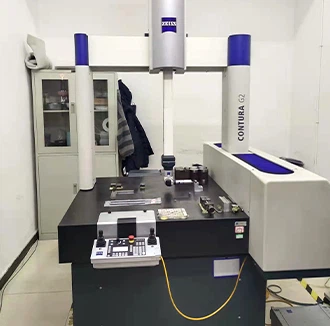
Beyond the raw material, our manufacturing techniques ensure the integrity of the final product. We utilize advanced processes like computer-numerical-control (CNC) machining for precision, and autogenous welding (like TIG) that eliminates the need for filler rods that could compromise the material's properties. This results in seamless, strong, and beautiful products that are inherently authentic, not just superficially coated to appear so.
We view our clients as partners. Our team of technical experts is available to discuss your specific application needs, whether you are a procurement manager for a aerospace component or an entrepreneur designing a new line of premium titanium goods. We provide more than just a product; we provide expertise and support.

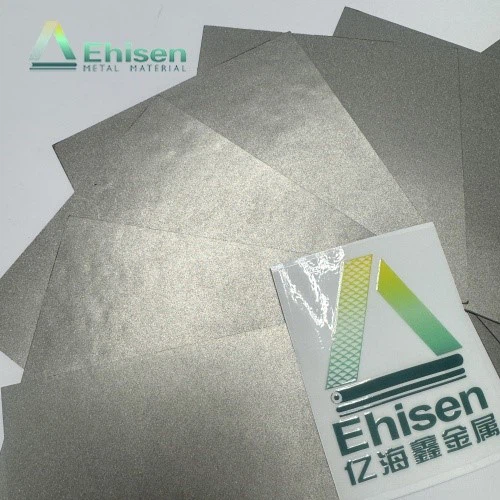
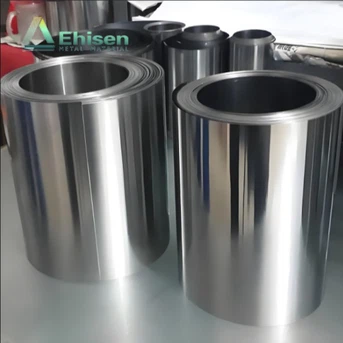
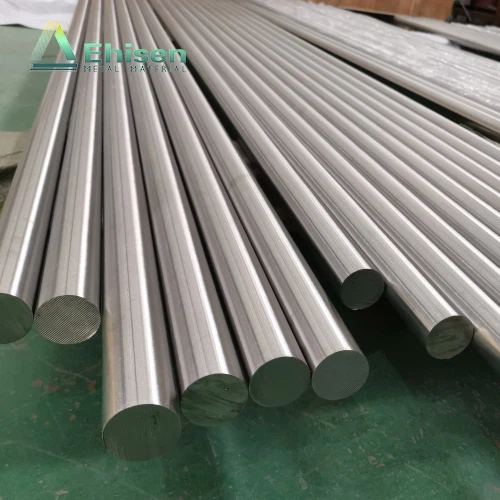
We invite you to explore the Ehisen product gallery on our website. Examine the high-resolution photographs and videos that capture the distinct, matte-grey texture of genuine titanium. Note the clean lines and robust construction that are hallmarks of superior manufacturing.
Take the Next Step with Confidence:
Your journey with titanium should begin and end with certainty.
For Enthusiasts and Individual Buyers: Browse our curated collection of titanium products and experience the unparalleled combination of lightness, strength, and corrosion resistance.
For Businesses, Engineers, and Procurement Professionals: Ready to integrate genuine titanium into your supply chain? Contact Ehisen today to request a quote. Our specialist team is ready to provide you with competitive pricing, detailed technical data sheets, and personalized support within 24 hours. Let us demonstrate why Ehisen is the trusted source for high-performance titanium solutions.
By choosing Ehisen, you are not just buying a metal; you are investing in a partnership built on knowledge, quality, and unwavering integrity.
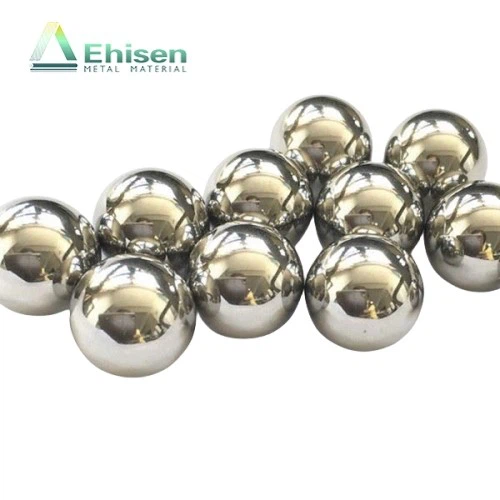




View More Titanium Processed Products